
When Kyle Hines walked into a Wounded Warrior Project® (WWP) office seeking help with her disability claim, she had no idea the visit would eventually connect her family with the team that saved her husband's life. A brochure for WWP’s Independence Program caught her attention and prompted her to ask whether her husband might qualify.
Kyle’s husband, former Air Force explosive ordnance disposal (EOD) technician Daniel “Reese” Hines, was severely wounded while attempting to disarm an improvised explosive device (IED) during a deployment to Afghanistan on April 9, 2011. The blast caused a traumatic brain injury, extensive musculoskeletal damage, the loss of his right eye, the amputation of his index and middle fingers on his right hand, and the loss of function in his right arm.
Reese was placed in a medically induced coma for nearly two weeks and spent a month on a ventilator. His mother, Renee Kennedy, remembers standing beside him in the intensive care unit searching for signs of the son she knew.
“His face and head were wrapped in gauze, and the only strip of flesh I could see was across his eyes,” Renee said. “I gained strength from watching Reese lying in ICU in Landstuhl, Germany, and knowing that he had just survived what would have surely killed many others.”
Over the next two years, he underwent more than 40 surgeries at Walter Reed National Military Medical Center. Every bone in his face had been broken, and the road ahead required extensive rehabilitation.
Life After the Rescue
Kyle met Reese about four years after his injury. As they built a life together, they also shared with their two sons the lessons they learned about adapting to change and facing challenges as a family
“They have watched him struggle and adapt to doing things a little differently,” Kyle said. “They have learned to jump in and help without judgment when someone needs it. It’s just part of our day-to-day life.”
For Reese, surviving meant experiencing the family milestones that followed. “I have been able to watch my two kids grow up to be adults,” he said. “I got a chance to meet my amazing and wonderful [wife], who saw something in me that made her choose me to be her husband.”
However, one connection remained unfinished — meeting the people who had reached him in those first critical minutes. Kyle knew the meeting would give Reese a chance to share the gratitude he had carried throughout his recovery.
“I’ve heard Reese tell his story hundreds of times over the years and he has such gratitude when he speaks of those that saved him,” she said. “I also knew that it would be another piece in the healing process for Reese, his mom and all of the guys that went through that time with [him].”
Finding the People Who Saved Reese
Air Force pararescuemen, known as PJs, reached Reese within eight minutes. They performed an emergency tracheotomy in the field. Reese survived, but the people behind those lifesaving moments remained strangers to him.
Over the years, the Hineses wondered who those rescuers were and what they remembered about that day. Reese was also curious whether the specifics they could offer would help him better piece together the timeline of events.
Some of those answers came through WWP®, where the Hineses met Major Gifts officer Krissy Lopez. Her husband, Col. Joe Lopez, commands Air Force Special Warfare Training, and through him, the PJs and pilots who helped save Reese’s life were located.
Kyle was excited by the news but also wondered how revisiting that day might affect Reese. Reese shared the same anticipation. His memories of the rescue are scattered, and much of what he knows comes from conversations with others who were there. Meeting the team would give him a chance to better understand what happened — and finally thank them in person.
A Reunion 15 Years in the Making
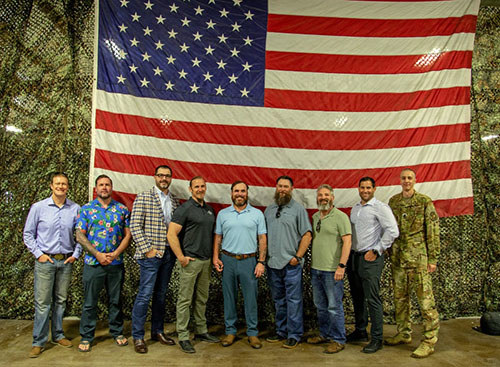
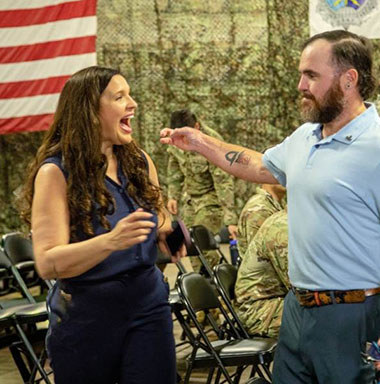
On April 7, 2026, Reese reunited with the PJs who rescued him, the pilots who supported the mission, and members of his EOD team.
“Being able to tell them what saving me meant and to personally thank them was definitely something I’ll never forget,” Reese said.
Kyle watched the conversations replace the uncertainty that had preceded the reunion.
“It was heartwarming to watch him meet everyone and see how at ease they all were with each other right away,” she said. “I know he was nervous and worried that he wouldn’t be able to convey just how appreciative he feels. But seeing them all together put all those worries to rest.”
After the ceremony, Reese, Kyle, Renee, and members of the teams gathered at a local brewing company to mark the reunion.
In the end, Reese realized he wasn’t the only one who had carried that day with him. For the people who saved him, seeing the life that came after the rescue made the reunion meaningful in a different way.
A Family’s Gratitude, a Brother’s Full Circle
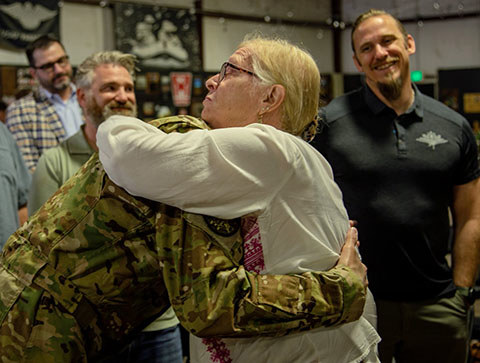
For Renee, meeting the team meant finally speaking to the people who gave her more years with her son. “A million ‘thank yous’ would never be enough, and I am eternally grateful to you all!” she said.
Reese’s brother, Yuri Hines, did not attend the reunion, but his own Air Force career created another remarkable connection to the rescue. He became commander of the 55th Rescue Squadron, the same squadron whose Airmen had helped save Reese’s life.
“When I later flew rescue missions, I carried that perspective with me: the person we were going to get was someone’s brother, son, husband, or friend,” he said. For Yuri, his brother’s life shows the impact those missions can have long after the rescue.
“The aircrews' actions gave [Reese] more time with his family and the people who love him,” he said. “I wanted the Airmen of the 55th to know how grateful we are, and that what they did became part of our family’s story.”
Supporting Independence Beyond the Reunion
The reunion gave the people who saved Reese a chance to see the life he has built since his injury. Watching that unfold gave Meghan Beach, Reese’s WWP Independence Program specialist, a new perspective on what the reunion meant to the rescuers, too.
“While I initially viewed the experience through his perspective and the closure it might provide, it became clear that the teammates who rescued him carried their own questions, memories, and emotions from that day,” she said. “Seeing Reese thriving, meeting his family, and witnessing the life he has built offered them a sense of closure, gratitude, and peace as well.”
Helping Reese build a life of independence is at the heart of Meghan’s work with him. WWP’s Independence Program provides individualized, long-term services for veterans and service members whose moderate to severe brain injuries, spinal cord injuries, or neurological conditions make day-to-day living difficult.
“My role is to help Reese pursue goals that support his quality of life, independence, community engagement, and personal fulfillment,” Meghan said. “Supporting Reese means helping remove barriers so he can continue living a life that reflects his values, passions, and remarkable determination.”
That support evolves alongside Reese, recognizing that his goals and needs may change over time.
“I hope readers recognize that recovery is not a destination,” Meghan said. “For many warriors, it is a lifelong journey that involves adapting, growing, and discovering new ways to engage with life."
Passing the Second Chance Forward
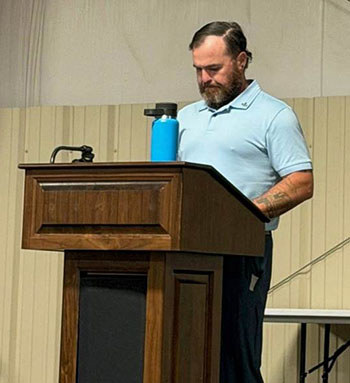
Reese’s reunion gave him the chance to thank the people who helped save his life. Speaking to a class of pararescue graduates gave him the chance to pass that gratitude forward.
He shared his story and what their training had made possible. His message went beyond the rescue itself. He wanted them to understand how one lifesaving act can continue to touch lives for years to come.
Today Reese plays with the USA Patriots, a softball team of mostly veterans with amputations whose fundraising supports an annual camp for children with limb differences and amputations. “It has given me purpose and helped me share my experience with being an amputee and my ongoing recovery,” he said.
He and Kyle have also fostered almost 400 dogs, including mothers and puppies and dogs needing hospice or specialized care. After experiencing the role their own service dogs played in their recoveries, they wanted to help other dogs in need.
Looking at the life he has built since his rescue, Reese sees its impact differently today.
“I realize that saving another’s life makes an immediate impact, but all of the potential life events that follow compound and ripple out to affect so many other people’s lives,” Reese said.
Learn more about how WWP's Independence Program serves warriors and their families.