
| Table of Contents |
| Carla Best: Redefining Self Until Finding Her Voice |
| Cassandra Johnson: Motherhood Isn't a Detour, It's the Mission |
| Danette Fleishman: Service Didn't End, Purpose Evolved |
At the grocery store checkout, her veteran hat shows she served. Still, eyes drift past her, look over her shoulder, scanning for a husband, a brother, a father — someone else this story must belong to.
For many women warriors, these experiences are familiar—almost routine. The Wounded Warrior Project® (WWP) Women Warriors Report shows that while many women veterans are proud of their service, they are often overlooked.
That reality can turn pride into something that feels constantly in need of correction. The weight of that experience is often compounded by unspoken expectations about what it means to move through the world as a woman. Wanting to be seen isn’t about seeking special recognition. As shared in the Women Warriors Report, it’s about recognizing that women veterans bring a distinct experience—one that deserves to be understood and acknowledged.
To better understand this dynamic, WWP® spoke with three women warriors about their experiences, the complexities of military identity, and how they’re using their voices to help others.
Carla Best: Redefining Self Until Finding Her Voice
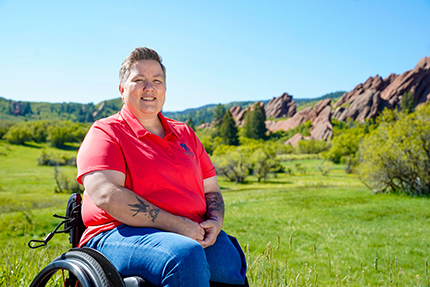 Before the Army, Carla was grounded in who she was. But when she enlisted during the era of “Don’t Ask, Don’t Tell,” her identity, once worn with pride, became something to compartmentalize and hide. She reshaped herself and became fully committed to being a soldier, through and through.
Serving her country demanded adaptation. She worked as a mechanic in the Ordnance Corps, a male‑dominated field where she constantly had to prove she belonged. “I was always starting over,” she said. Like so many women in uniform, she navigated sexism — including sexual harassment — and consistent scrutiny of her presence.
Before her first deployment, her partner gave her personalized dog tags. Carla carried them in her wallet, tucked into her right cargo pocket. They were there the night everything changed. She was outside the Green Zone when white flares filled the sky, then green ones, and then an explosion. After nearly 20 surgeries and two years at Walter Reed, she lost her left leg, and with it, her Army career.
Carla received her personal effects during her recovery, and inside the bag were those dog tags from her partner, still covered in dried blood. The leather wallet holding them was pierced, but the tags were not. They were dented ̶̶ molded to the exact shape of the shrapnel beside them. Doctors told her it was a miracle she didn’t lose both legs.
WWP women warriors reflected on the experience of being in civilian life, which they felt is a different world compared to being in military service. Being out of service and in a different environment, WWP women warriors felt surrounded by people who do not understand what they’ve been through. — Women Warriors Report 2025 |
Even after leaving the Army, the separation in identity remained. Carla still moved carefully. She continued to keep parts of herself guarded. She avoided resources meant to help her, still afraid someone would discover that Mary Ann was her wife, not her roommate. She didn’t know where she fit in the world – mixed emotions over her military identity that many women veterans often feel.
When her uniform was retired, the expectations weren’t. Post‑service, she was often the only woman veteran in the room — visible, but still peripheral. Finding community with other women veterans through WWP changed everything.
“For the first time, I introduced myself as a woman veteran and didn’t feel the urge to shrink,” she said.
| The Women Warriors Report highlights that there’s often an instant connection between women veterans. They feel a strong bond toward those they served alongside, including reflections on the difficulty of losing that strong unit when they leave service. |
In those rooms, she reclaimed what years of blending in had muted — her voice. Advocacy through WWP followed, then purpose. “If their stories carried weight, then so did mine.”
Finding herself again didn’t mean choosing one identity over another. It meant owning all of them. What she learned mirrors what so many women warriors describe: Identity is not a liability to manage, but a strength reclaimed. And it’s one worth protecting — for the women beside her, and for the generations to come.
Cassandra Johnson: Motherhood Isn’t a Detour, It’s the Mission
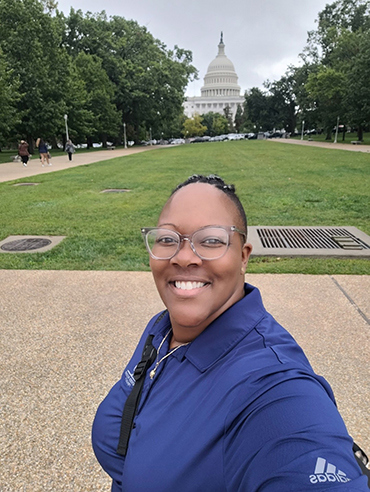 Cassandra Johnson’s decision to serve was rooted in family legacy. With generations of her family in the Army and the Marine Corps, service wasn’t just a concept for her; it was familiar, respected, and alive in the stories she grew up hearing. Joining the Navy felt less like a leap and more like a continuation.
But motherhood reshaped everything about her military identity. Having her son while on active duty forced her to confront competing commitments.
She balanced caretaking with proving herself as a strong sailor. She could do it all – and she would prove it. But she struggled with leaving her son. When she decided to separate from the military in 2014, it wasn’t due to a lack of dedication. She wanted to be fully present for her family.
“My lifelong mission became having the full mother experience,” she said, especially after welcoming her daughter.
55% of women warriors have one or more children living at home. |
But like many women warriors experience, that shift in mission also brought mixed feelings over identity. WWP’s Women Warriors Report notes that many women veterans feel they lose part of their identity after service, with parenting adding further complexity during and after their military careers.
Cassandra was recognized when she wore the uniform; she was seen by her command, trusted with responsibility, and supported as a parent in service. When the uniform came off, the recognition faded. She didn’t even fully grasp that she was considered a veteran herself until hosting a Veterans Day event at her daughter’s school.
“Being a woman veteran versus being a veteran who is a woman — that difference matters,” she said.
|
Cassandra chooses to be seen. She surrounds herself with people and organizations that celebrate women veterans openly, not conditionally. Through WWP, she advocates for herself and for her “sister veterans” not yet ready to share their own stories. She challenges others to think about the last time they felt unseen and to uplift others' voices.
“It’s exhausting,” she admits, having to constantly explain why invisibility of women veterans is harmful. But she stays. She speaks. She leads. For Cassandra, being seen isn’t about praise — it’s about making room for women veterans to show their strength, their growth, and the futures they’re still building for other women who come after them.
| The Women Warriors Report highlighted that “intertwined into the discussion around military identity were the experiences of finding a purpose after military service: both the challenges of finding a purpose and the contentment felt when succeeding. Often, WWP women warriors would share wanting to help others, whether giving back to the community or having a sense of advocacy tied to their military identity and purpose today.” |
Danette Fleishman: Service Didn’t End, Purpose Evolved
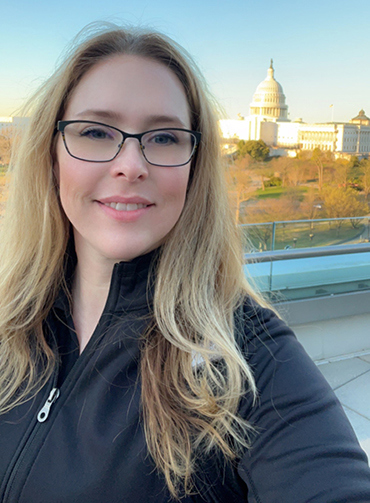 The transition from military service to the civilian world didn’t feel like a clean exit for Danette. It was more of a recalibration – no instruction manual, no training, no checklist.
“Leaving the military can feel like losing a clearly defined identity,” Danette said.
In uniform, purpose had structure and urgency. After the military, the question wasn’t whether she still wanted to serve, but how. Like many women veterans, Danette worked to redefine who she was without a rank or mission brief.
Finding her next mission meant balancing education, career goals, financial stability, and personal healing — often all at once.
“There were times I felt like I had to prove I could handle everything without showing the cracks,” she said.
Transition required not just forward motion, but patience with the uncertainty that came with it. Danette found new purpose through integration, not replacement.
“Service had become a part of who I was at my core,” she said.
A career in federal civilian service allowed her to continue contributing in a mission‑driven environment. Furthering her education became another way to reclaim confidence and leadership, proving to herself that growth didn’t end with military service. She now shares the lessons she’s learned with other women warriors.
“I didn’t want my experience to exist in isolation,” Danette said.
“Being a woman veteran is not something I did. It is a part of who I am.” DANETTE FLEISHMAN, woman warrior |
Supporting other veterans through WWP and advocacy helps her make sense of her own transition. In those shared spaces, her voice strengthened. Purpose, she realized, isn’t always found; it’s built, often in connection with others walking similar paths.
“Being a woman veteran is not something I did,” Danette said. “It is a part of who I am.”
WWP is committed to uplifting, empowering, and standing beside women veterans every step of the way. From using their voices to improve veteran policy to leaning on programs for mental health care, career growth, and community support, women veterans are building the tools they need to thrive on their own terms.