
AT THE FOREFRONTEvery generation of veterans teaches us something new about the consequences of military service and what it takes to heal. This series explores how those lessons, alongside advances in science and treatment, can improve veterans’ lives today and help build better care for generations to come. EXPERTS IN THIS STORY
|

A WOUNDED WARRIOR PROJECT® SERIES
Psychedelics Are Coming. Is PTSD Care Ready?
As researchers explore advanced therapies and other emerging treatments, Wounded Warrior Project and its clinical partners are working to expand options for veterans and understand which approaches work best for whom.
Treatments for post-traumatic stress disorder (PTSD) have helped countless veterans reclaim their lives. But not every patient achieves full clinical benefit, and when a veteran walks into a clinic, there is still no tried-and-true way in traditional treatment settings to know which treatment will work best for that person.
That uncertainty matters immensely for veterans who have already sought help without finding lasting relief, and many are asking: What about psychedelic-assisted therapy?
They’ve heard it from their friends. They’ve seen it on their local newscasts. They’ve even heard some of America’s most prominent politicians talk about it.
There’s plenty to be excited about with psychedelic-assisted therapy, experts say. Public enthusiasm is increasing, and research supports that psychedelic treatments are safe and effective for conditions such as PTSD and depression. More research is needed to identify what optimal psychedelic treatments are, which veterans are likely to benefit, which parts of the treatments provide the best results, and what it takes for those results to last.
Wounded Warrior Project® (WWP) is at the forefront of these conversations, advocating for responsible progress in providing psychedelic treatments guided by science, safety, clinical expertise, and — above all — the needs of veterans. Advanced therapies, including the use of psychedelics as well as other innovative treatments such as repetitive transcranial magnetic stimulation, should be seen as one part of a broader approach to mental and brain healthcare, WWP’s experts say.
How the two intertwine — advanced therapies and existing evidence-based care — may be crucial to the future of veteran care.
Adding to the Toolbox
Dr. Jessica Maples-Keller, associate professor and research director of the Emory Healthcare Veterans Program, often begins conversations about psychedelic-assisted therapy by discussing the effectiveness of established PTSD treatments.
Emory is one of WWP’s clinical partners in Warrior Care Network®, a longtime partnership WWP® founded in which veterans receive innovative, personalized, and accelerated treatment from a coordinated care team. More than 90% of participants complete treatment, with meaningful reductions in PTSD symptoms in just 10 days.
It’s unequivocally true: Effective treatments exist. But some veterans try multiple treatments without lasting relief. Standard treatments may not be the right fit for everyone. Even after decades of research into PTSD, clinicians lack consistently reliable predictors of treatment response.
“Our veterans and service members deserve choice when it comes to their mental healthcare.”
Dr. JESSICA MAPLES-KELLER, associate professor and research director of the Emory Healthcare Veterans Program
Dr. Maples-Keller and her colleagues are investigating whether physiological responses to trauma-related cues, blood-based biomarkers, genetics, and other biological measures could eventually help identify patients who may need a different approach.
She envisions clinicians using that information early, recognizing when someone is at risk of responding poorly and adjusting care before the patient endures an unsuccessful course of treatment.
“We want our clinic to always be providing best-in-class evidence-based treatment for everyone and always be pushing the envelope forward in terms of innovative treatments, making good treatment better, and getting every veteran to full response,” Maples-Keller said.
John Eaton, WWP senior vice president of Complex Care Programs, describes the overall approach as “precision mental healthcare,” coordinating treatment around each veteran’s particular needs, rather than expecting veterans to fit into a predetermined model of care.
“Veterans’ experiences are pretty unique, and it’s really important that providers are trained in that and understand how to provide care best for those individuals,” Eaton said.
The research into emerging therapies could eventually give clinicians additional tools. For now, the challenge is learning which approaches help, which patients benefit, and how emerging treatments might fit alongside therapies already in use.
The Limits — and Possibilities — of Advanced Therapies
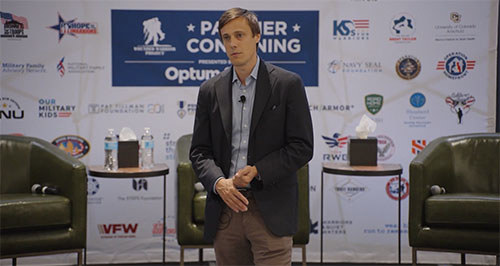
Dr. Franklin King, a psychiatrist at Warrior Care Network partner Home Base, Veteran and Family Care at Massachusetts General Hospital who studies psychedelic-assisted therapy, worries that public enthusiasm has moved faster than science and emphasizes the need for rigorous scientific evaluation.
With support from WWP, Dr. King and his colleague, Dr. Maren Nyer, are leading research at Home Base investigating MDMA-assisted therapy for veterans with PTSD, including studies examining its safety, feasibility, and potential benefits in both group therapy and conjoint therapy settings involving veterans and their partners.
Dr. King believes the excitement surrounding psychedelics has obscured fundamental questions about how they work and how patients benefit. The danger, he said, is that researchers and clinicians could overlook important aspects of treatment in the rush to make it widely available.
Part of the challenge is understanding how the circumstances surrounding psychedelic-assisted therapy will influence the treatment. It’s not as simple as administering a dose of a drug and hoping it works.
Dr. King offers a hypothetical example involving two people receiving the same dose of psilocybin.
Dr. King expects those circumstances to produce very different responses to the same dose. The patient’s internal state matters, too, including what the veteran thinks about during the treatment session and how they engage with the experience. Together, those factors may influence the treatment’s ultimate effects, he said.
That presents an unusual challenge for researchers. Conventional drug trials are designed to isolate the effects of a medication from other influences. But Dr. King argues that with psychedelics, those influences may be part of what makes treatment work. A clinical trial is therefore testing more than a dose of psilocybin: It's testing that dose alongside a particular approach to preparation, psychological support, and the environment in which treatment occurs.
Experts say that when these advanced therapies eventually become more widely available, clinicians and health systems will need to understand which elements of the research are important for safety and outcomes, and then how to deliver them consistently outside clinical trials.
Dr. King said another question is just as important: whether improvements last. Some patients experience striking short-term benefits, but he believes sustained recovery may depend on how they use the insights gained during treatment.
The Treatment Doesn’t End When the Drug Does
Eaton has heard veterans compare their experience with psychedelic-assisted therapies to wiping a dry-erase board clean. For a time, the old writing disappears. Then the person returns home and gets back to their normal routine. The challenge, Eaton said, is “if you go back home in the same environment, you will write the same stuff back on there.”
He sees integration — the work of processing an experience and applying what someone has learned to everyday life — as an important consideration in psychedelic-assisted care.
“There is real work required,” Eaton said. “And it’s on the warrior, the patient, the veteran, not entirely on the medication.”
“There is real work required. And it’s on the warrior, the patient, the veteran, not entirely on the medication.”
JOHN EATON, WWP vice president of Complex Care Programs
At Emory, WWP supported a pilot study combining MDMA with prolonged exposure therapy. The research explores how an emerging drug might be incorporated into an established treatment approach, and results suggest this approach is safe and highly effective for PTSD treatment. Dr. Maples-Keller has additional psychedelic research trials focused on psilocybin and MDMA assisted therapy that veterans can be screened for via the Emory Healthcare Veterans Program.
This is important since Dr. Maples-Keller has also encountered veterans interested in these advanced therapies who had never participated in PTSD treatment. Some said they would be open to participating in a study combining MDMA with therapy, despite previously being reluctant to pursue trauma-focused therapy on its own.
For Dr. Maples-Keller, those encounters have also underscored the importance of patient preference. “Our veterans and service members deserve choice when it comes to their mental health care. A treatment’s effectiveness matters little if someone is unwilling or unable to pursue it.”
Some veterans who expressed interest in Emory’s psychedelic research pilot but did not qualify for the study ultimately enrolled in its established PTSD treatment program.
Although they initially sought an alternative approach, their interest in the research opened the door to treatment they might otherwise have been reluctant to pursue. Experts say this underscores the potential for emerging therapies to engage veterans who have traditionally avoided seeking care.
Preparing Before Access Expands
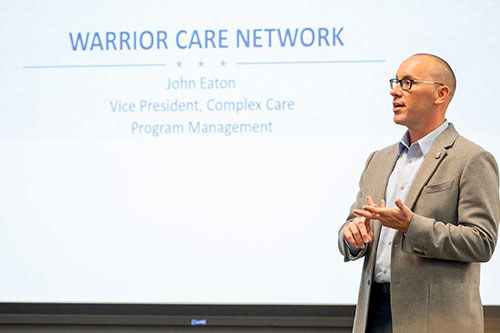
Eaton and Dr. Maples-Keller have met numerous veterans who are seeking psychedelic experiences and have many questions about the care and support available to them.
Dr. Maples-Keller says it’s vitally important for veterans to understand what a particular program provides. Medical screening, qualified providers, preparation, and follow-up support can vary, and the safeguards used in clinical research should not be assumed to exist in every setting.
Those distinctions matter wherever care is delivered.
Psychedelic-assisted therapies can also require substantial clinical resources. Dr. Maples-Keller described research models involving medical assessments, monitoring, and multiple professionals supporting a patient. Wider implementation could raise difficult questions about provider training, clinical standards, affordability, and continuing care.
WWP views emerging therapies, including psychedelic-assisted approaches, as potential additions to established, evidence-based care. Their broader use must be guided by rigorous research, patient safety, and appropriate clinical oversight, the organization says.
Eaton believes veteran service organizations play an important role in helping shape how emerging treatments are evaluated and, when supported by evidence and appropriate authorization, are ready to be introduced into clinical practice.
“How can we be a convener and help set the standard for what care should be looking like as it’s rolled out?” he asked.
Psychedelic research has generated enormous interest, and for good reason, but many of the most important answers are still being worked out in clinical studies, including at WWP’s partner programs. Those answers will help determine which veterans will benefit from these therapies, and how.
Eaton sees a role for organizations like WWP in bringing researchers, clinicians, policymakers, and veteran advocates into conversations about safety, training, access, and the needs of people seeking treatment. To help move treatments beyond clinical trials, collaboration is key, especially around decisions related to provider training, clinical standards, follow-up care, and payment, with evidence setting the pace.
For veterans who can benefit from established therapies, effective care is available now. For those still searching for relief, continued research offers the possibility of more options.
Find out more about how WWP supports treatment for PTSD and TBI.