
Motorcycles and the military have a long history.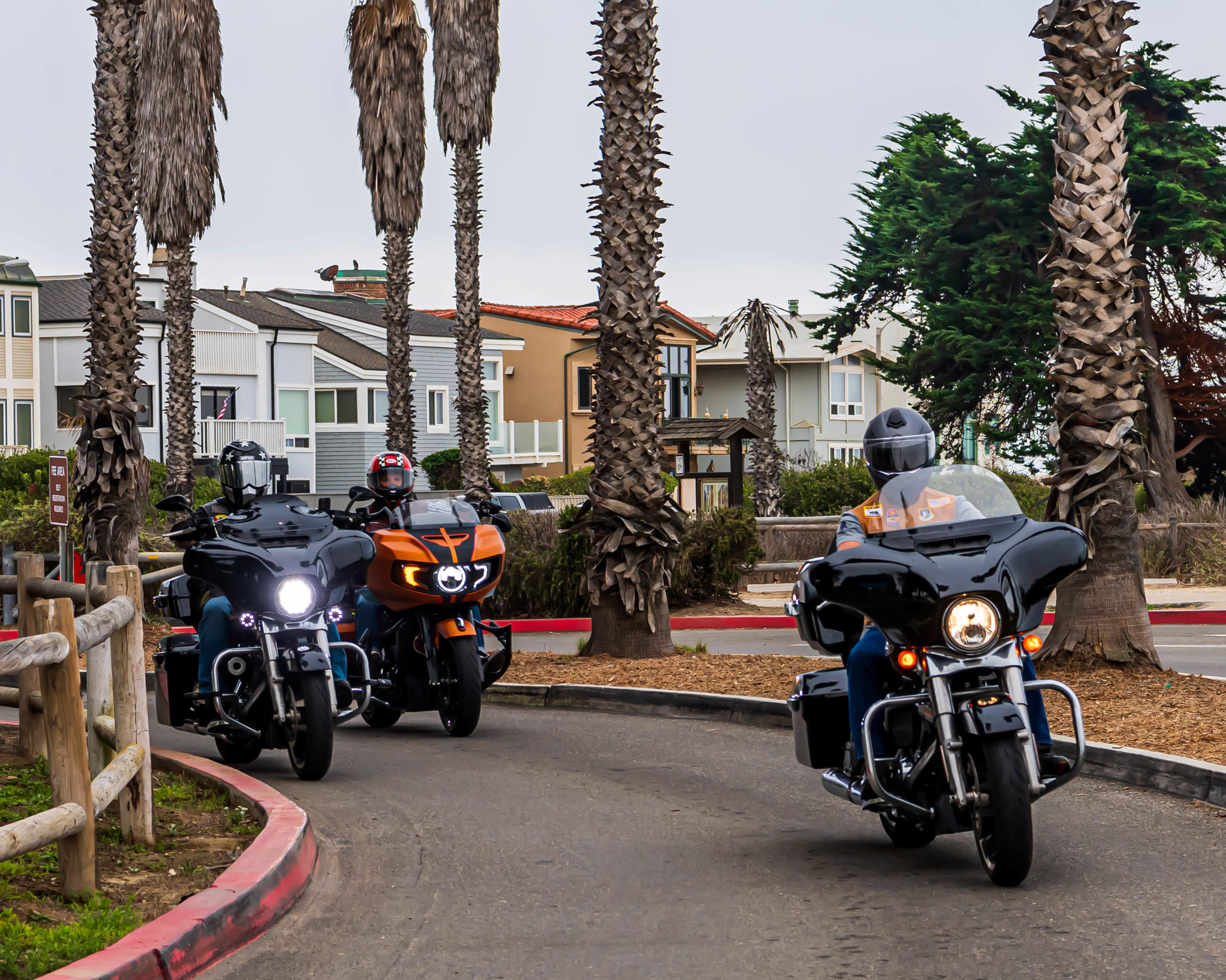
During World War I, motorcycles became a vital part of military operations. Lightweight and maneuverable, they gave troops faster, more flexible ways to communicate and scout terrain. Dispatch riders used motorcycles to deliver messages more quickly than horse-mounted riders. Motorcycles also helped troops navigate areas where larger vehicles couldn’t travel. Some bikes were outfitted with sidecars to carry machine guns, first aid supplies, and other field equipment.
In World War II, motorcycles took on a larger role. Harley-Davidson produced almost 90,000 motorcycles for use during the war, supporting everything from reconnaissance to military police work.
When the war ended, surplus motorcycles became inexpensive and widely available. Many veterans who had ridden motorcycles during their service continued riding at home, and veteran riding groups began to emerge across the country.
Today, veterans often use terms like “wind therapy” or “throttle therapy” to describe the sensory experience of riding. Studies show motorcycling can improve mood, reduce stress, and support overall well-being.
Recognizing those benefits, Wounded Warrior Project® (WWP) created Rolling Project Odyssey, giving veterans a unique opportunity to build resilience and connection on the open road.
The Power of Presence
For Charlie de la Cruz, an Air Force veteran and facilitator for WWP’s Project Odyssey® program, motorcycle riding creates something many veterans seek after service: the ability to be fully present.
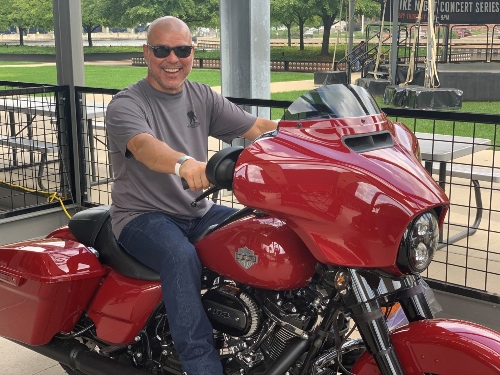
“When the wheels are rolling, you can’t help but be in the present moment,” Charlie says. “All five senses are engaged.”
Unlike driving a car, riding demands complete attention. Riders feel changes in temperature, road conditions, traffic patterns, wind, vibration, and movement in real time. There is little separation between the rider and the surrounding environment.
For veterans living with post-traumatic stress disorder (PTSD), anxiety, hypervigilance, or other challenges, Charlie says that heightened awareness can be grounding.
“It just brings a mental clarity because you are so focused on the present moment and the act of riding,” Charlie says.
“Then, when you get off the bike, you realize, ‘That thing I’ve been worried about isn’t that big of a deal.’”
For Charlie, and many other veterans, the motorcycle is more than transportation. It is the vehicle — literally and figuratively — that helps them find healing.
Finding Confidence and Community
For Navy veteran Samara Songer, motorcycle riding became a way to rediscover confidence and find connection after service.
Growing up in Arizona, she remembers a family friend who had a Harley-Davidson.
“It was so cool, and that became my dream, to one day have my own Harley-Davidson,” says Samara, who joined the Navy at 20, serving in shipboard damage control, a role similar to a firefighter.
She medically separated from service in 2007 after breaking her back in an on-the-job accident. Adjusting to civilian life was challenging, and years passed before a ride on the back of a friend’s motorcycle resurfaced her childhood dream.
She decided it was time to learn to ride. 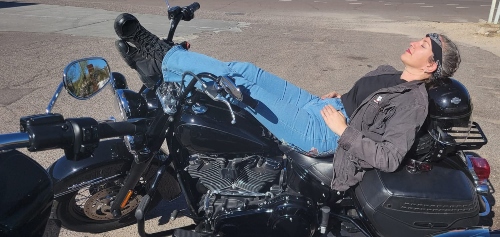
Despite being the only woman in the training class, she was undeterred.
"It was scary," Samara recalls. "But when I finally got on the road, it was this freedom."
Today, she owns a Harley-Davidson Heritage and says riding gives her a sense of freedom unlike anything else.
“You’re just moving in unison with the road and the wind and everything,” she says. “It’s the closest thing to flying.”
Learning to handle a motorcycle weighing more than 700 pounds also required patience, practice, and trust in herself. Every turn, lane change, and mile demanded her full attention.
“I have to be so focused that the rest of the world disappears,” Samara says. “If I have something going on, it’s an escape for me.”
Over time, riding became more. “It makes certain things so minuscule. It puts things in perspective,” she says.
Through riding, Samara has also found community, connecting with veterans who share her passion for motorcycles and understand the unique challenges of military life.
“I’ve made so many friends riding,” she says. “Out there on the road, you're family.”
Finding Brotherhood Again
Long before he ever owned a motorcycle, Ray Andalio carried one in his pocket. 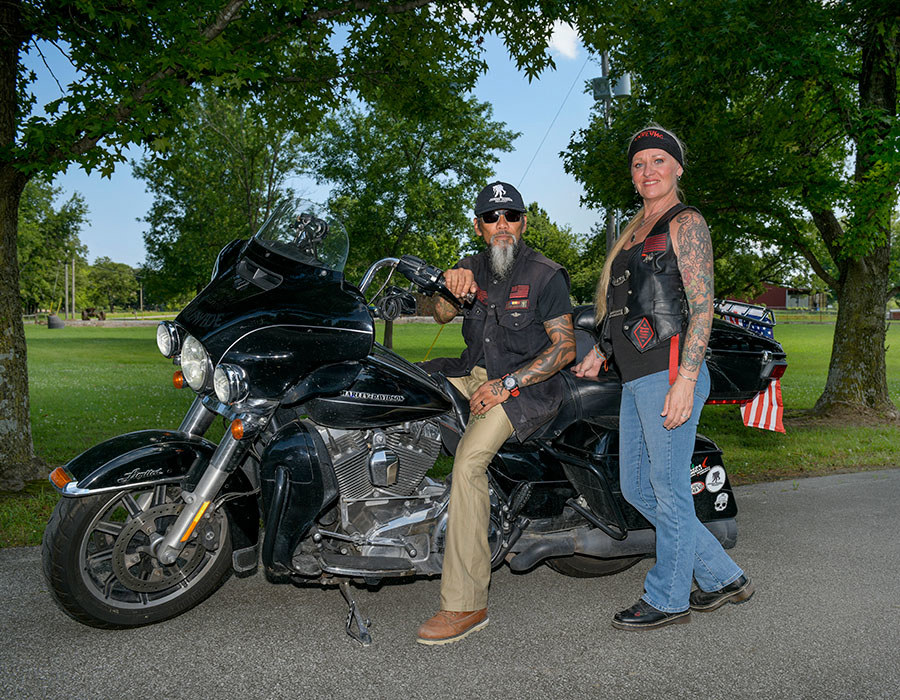
When his family immigrated to the United States from the Philippines, Ray was allowed to bring only a few personal items. One of them was a miniature Harley-Davidson, a gift from his cousin.
The toy was more than a keepsake. For the future Navy corpsman, it represented a dream that stayed with him through his military service and deployments to Kuwait and Iraq.
"I had told myself, ‘If I make it home alive, I'm going to buy a motorcycle.’”
In August 2003, his dream became reality when Ray and his wife purchased a 100th anniversary edition 883 Harley-Davidson Hugger Sportster.
The motorcycle soon became more than a lifelong dream fulfilled. It helped Ray reconnect with other veterans and, over time, helped him process some difficult experiences he carried from service.
Riding introduced Ray to a community of people who shared a common bond, regardless of branch, rank, or background.
“There is an immediate bond and camaraderie riding with other veterans. We think the same and have shared understanding and experiences,” he says. “I realized I could have brotherhood again out of uniform.”
The kinship was powerful, but it wasn’t the only reason riding became important to Ray.
“Group rides often serve as a form of therapy, allowing veterans to process their experiences in a supportive environment. The act of riding, combined with camaraderie, can be incredibly healing,” he says.
Today, Ray rides for pleasure but also to help others move forward. He’s always looking for opportunities to connect with and support other veterans who may be struggling with challenges similar to his.
“That’s my goal,” he says. “To be able to get on the bike and reach those brothers and sisters that need someone reaching out to them.”
Finding Joy in the Journey
For Army veteran Bill Geiger, riding motorcycles began as a simple means of transportation. As a teenager, Bill used money he'd raised for his senior class trip to buy an old Kawasaki motorcycle instead. At the time, it was an affordable way to get around and offered him a taste of independence.
Years later, riding reminds him to slow down, appreciate the journey, and find joy in the ordinary.
“Everybody has to get from point A to point B,” says Bill. “I’ve got to go to work. I’ve got to go to the grocery store. I’ve got to run an errand. But when I choose to take the motorcycle, it changes from ‘I have to’ into ‘I get to.’”
For Bill, that change in perspective is one of riding's greatest gifts.
"It's more the excitement of the journey," he says. 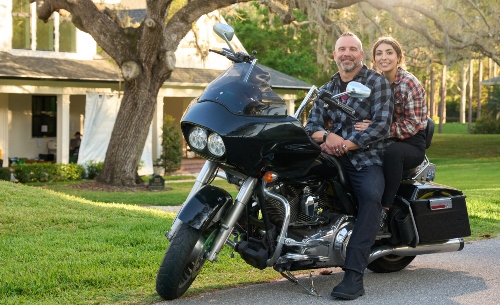
That mindset can be especially meaningful during tough days. Riding demands Bill’s full attention, leaving little room to get caught up in worries or distractions. “I need both hands, both feet, and every sense to ride safely,” he says.
“Riding keeps me from focusing on things I would otherwise dwell on,” he says. “It almost forces you into a better mental situation."
Riding has also made Bill more attentive to the world around him. He’s more aware of the changing scenery, the warmth of the sun, the rush of cold wind, even aromas along the road.
"In a car, you can have a full conversation going down the road," he says. "On a motorcycle, you can't. It makes me more aware. I observe more things in nature that I'd completely miss in a car."
Motorcycles have also allowed Bill to strengthen connections with others, including his family and other veterans.
"It's fun to have somebody with you, riding on the back or as part of a group," he says. "You can just spend time together without really ever saying anything."
For Bill, life may have its ups and downs. But thanks to his motorcycle, he’s going to enjoy the ride.
Rolling On, Together
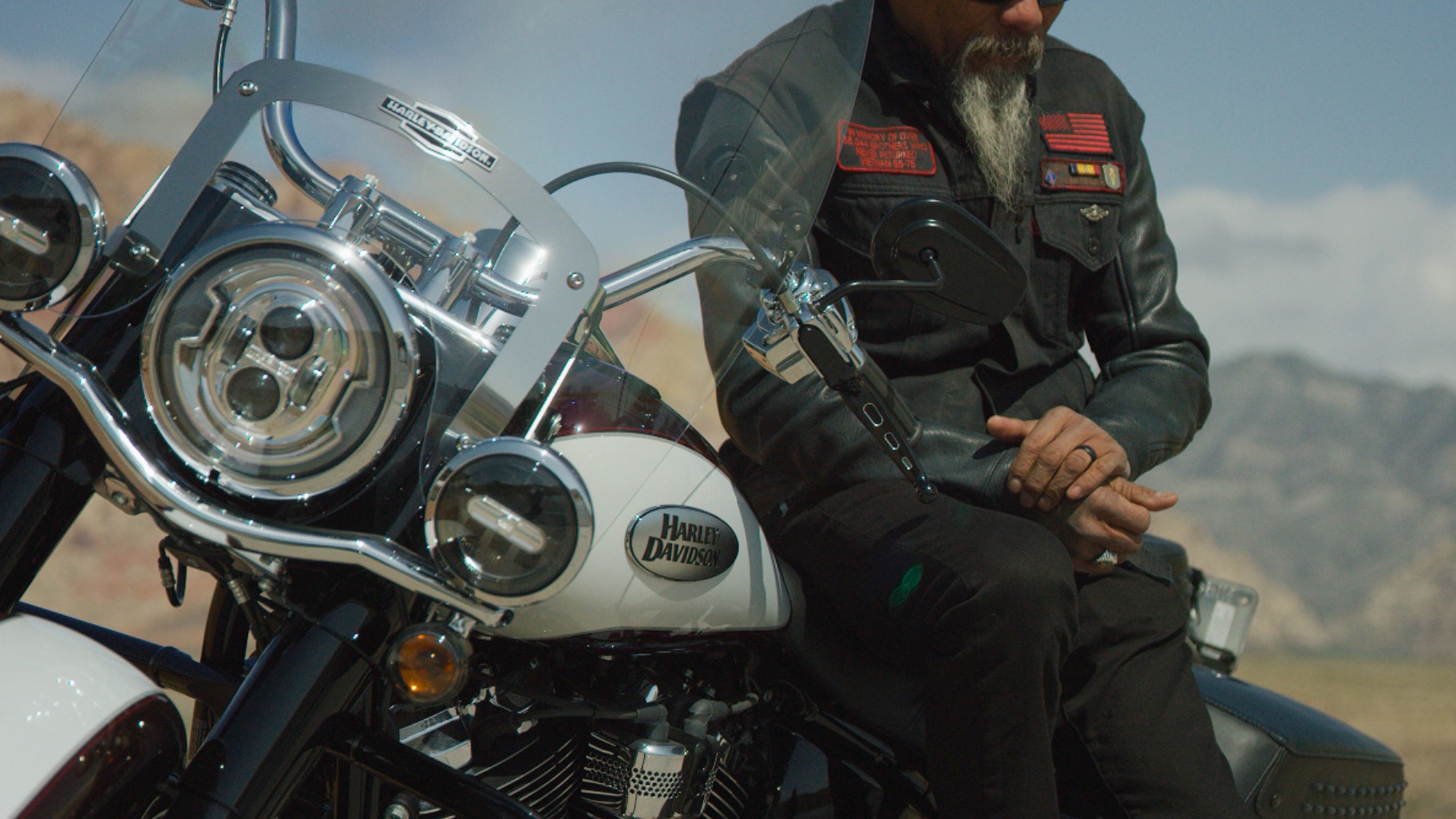 When veterans ride together, something special happens.
Even though conversations may be sparse when a group is rolling down highways and backroads, riding together creates a shared experience. Trust builds mile after mile.
“They are moving through trauma and healing together,” says Charlie. "The motorcycle is the safety blanket that gives them the comfort to move to vulnerability.”
Over time, those shared miles often lead to deeper conversations about military service, family, and even mental health.
Charlie has watched it happen countless times, especially during Rolling Project Odyssey rides.
"The motorcycle gets them present," he says. "Once they're present, they're open.”
More than a century after motorcycles became part of military service, they continue to represent more than just a way to get from one place to another. For many veterans, every ride offers an opportunity to find clarity, camaraderie, or simply the joy of the journey. continue to find something meaningful when they hit the road together.
What is Project Odyssey?
Project Odyssey is a 12-week mental health program designed to help build mental resilience, through group activities, outdoor challenges, and individual support.
Coed, all-female, all-male, couples, and family retreats are available. For motorcycle enthusiasts, WWP offers a riding experience known as Rolling Project Odyssey.
Ready to ride? Learn more about the program.
Warrior Words of Wisdom
"When I’m going somewhere, whether I’m going slow or fast, I’m in control. The bike helps set me in a place that’s just okay, everything’s cool. There’s nothing past or future, only presence."
— Ray Andalio
"When the wheels are rolling, you can’t help but be in the present moment. All five senses are engaged."
— Charlie de la Cruz
"You’re just moving in unison with the road and the wind and everything. It’s the closest thing to flying."
— Samara Songer