
 If you or someone you know needs help, get free and confidential support 24/7. If you or someone you know needs help, get free and confidential support 24/7.
|
Suicide can be difficult to talk about, but avoiding the subject can reinforce stigma and leave people feeling alone. Open, direct, and compassionate conversations can help someone feel seen and create a path to support.
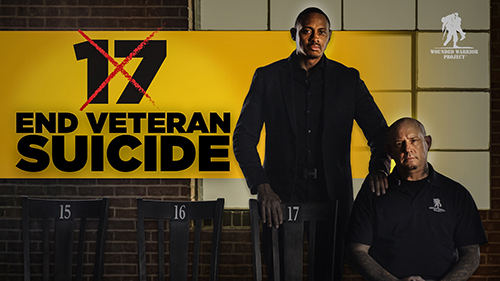
Veteran suicide remains a serious concern. In its 2025 National Veteran Suicide Prevention Annual Report, the Department of Veterans Affairs (VA) reported an average of 17 veteran suicide deaths each day. Suicide was also the second-leading cause of death for veterans under the age of 45.
Wounded Warrior Project® (WWP) is committed to ending veteran suicide, because one is too many.
Finding a Way Forward
For WWP® warrior Joe Stabley, the urgency to end veteran suicide is personal.
One of Joe’s earliest traumatic experiences in the Army did not happen in combat. Before 9/11, while serving on a peacekeeping mission in Egypt’s Sinai Peninsula, he lost a close friend and fellow soldier to suicide. The loss left him with painful, unanswered questions.

WWP warrior Joe Stabley dealt with losing a friend to suicide and had his own issues with suicidal thoughts before reaching out for help.
The uncertainty stayed with Joe. He knew his friend had been carrying pain, but the silence surrounding his death made it difficult to understand what he had been going through. For years, Joe replayed the loss and wondered what signs everyone might have missed.
“The fact that there was uncertainty and nobody talked about it — we didn’t even talk about it as a suicide,” Joe said. “We just didn’t talk about it at all.”
His friend’s death was not the only trauma Joe was carrying. Through therapy and conversations with mental health professionals, he began to understand how earlier losses had shaped him long before military service.
As a child, he witnessed the medical crisis that led to his father’s death. Years later, he recognized how that loss influenced his drive to become a medic — and the distress he felt when he could not save someone.
Over time, Joe accumulated trauma, chronic stress, and helplessness. As he struggled with his own mental health, he began to understand what his friend in Egypt may have experienced. Joe started dealing with his own suicidal thoughts and contemplated ending the pain once and for all. His wife and children gave him a powerful reason to pause. Because he and his wife had both lost their fathers as young children, Joe was determined not to pass that loss to another generation. But choosing to stay was only the beginning; recovery required him to rethink what strength and perseverance meant.
“I’m going to break the cycle,” Joe said. “I can’t have my kids lose their father after both my wife and I lost our fathers. … So, I’ve got to figure out how to heal and how to stay well.”
One of the hardest lessons was recognizing when walking away was an act of self-preservation, not a sign of failure. The military had taught Joe to push through physical and mental limits, but some civilian jobs and environments kept his nervous system in a constant state of stress. Protecting his mental health sometimes meant leaving situations that were making him worse.
“I had to know when to consider something a failure and when to consider that the best decision is to quit or walk away because my life really does depend on it,” Joe said.
Instead of seeing every departure as a defeat, he learned to view some choices as necessary adjustments toward a healthier life. Joe learned it was OK to lean on his family and the connections he made with fellow veterans when those feelings of hopelessness arose.
“When the body and the brain are so overwhelmed that that’s where your mind goes, that’s not the time to be isolating or hiding in shame,” Joe said.
Recovery unfolded over more than a decade. Joe tried different jobs, medications, and programs, learning that care is rarely one-size-fits-all. Progress was not a straight line.
“My journey took 12 years,” Joe said. “A lot of different jobs, a lot of different nonprofits and organizations, finding medicine that worked, getting off medicine that didn’t work, finding people to live for, and purpose. It’s been a long journey.”
From Personal Experience to Prevention
The most recent WWP Warrior Survey* underscores the need for prevention: More than 1 in 4 warriors reported having suicidal thoughts in the past 12 months.
Lyndsay Tkach, WWP’s Mental and Brain Health Services director, emphasizes that prevention cannot begin only when a crisis is underway. It also means strengthening connections, addressing stressors, and building a safety plan before someone reaches a dangerous point.
“Our approach is: How do we promote protective factors and reduce risk factors in your life so that we’re not at a point of crisis?” Tkach said. “Let’s come up with that safety plan when you’re not at a point of crisis.”
Veteran Suicide FAQs
There is no single cause of suicide. Risk is often influenced by a combination of factors, including:
- A previous suicide attempt
- Trauma
- Depression or other mental health conditions
- Substance use
- Chronic pain
- Sleep problems
- Job or financial strain
- Relationship difficulties
- Social isolation
- Hopelessness
- Access to lethal means
While risk factors do not predict that someone will attempt suicide, they can signal a need for greater attention and support.
Warning signs that someone is considering suicide can include:
- Withdrawing from family, friends, or activities.
- Giving away prized possessions.
- Engaging in reckless behavior.
- Increasing alcohol or substance use.
- Neglecting personal care.
- Showing significant behavioral changes.
- Talking about feeling trapped, burdensome, purposeless, or without a way forward.
Statements such as “Some days I just don’t want to wake up” should be taken seriously.
“We should be as familiar with the signs that somebody might be contemplating suicide as we are with signs of a stroke or heart attack,” Tkach said. “And we should know how to ask the question.”
Be direct, calm, and nonjudgmental. If someone is describing a painful situation and seems unable to see a way forward, acknowledge what you are hearing and ask plainly: “Are you thinking about suicide?” Research and crisis-prevention guidance show that asking directly does not plant the idea of suicide or increase suicidal thoughts.
“Those conversations often begin with somebody talking about their situation and how they don’t see a way out,” Tkach said. “You can say, ‘I hear you saying a lot of things, and it sounds like you’re losing hope right now. I’m going to ask this because it’s important: Are you thinking of suicide?’”
Take the answer seriously and listen without judgment. Stay present, help the person connect with trained support, and work together to identify some immediate safety measures. If there is an imminent danger, call 911.
Anyone can call or text 988 for the Suicide & Crisis Lifeline; veterans and their loved ones can call 988 and press 1, text 838255, or use VeteransCrisisLine.net.
Remember that you are not responsible for fixing the situation or creating hope for someone else. Your role is to stay present, reinforce that the crisis can change, and connect the person with support.
“You don’t give someone hope — that’s not your responsibility, and you can’t get inside their head,” Tkach said. “What you can do is help them see that you’re there, that how they’re feeling right now is temporary, and that support and resources are available. They do not have to go through it alone.”
During a suicidal crisis, a person may become intensely focused on their pain and unable to see alternatives. Putting time and distance between that person and a potentially lethal method can give the crisis time to pass and create an opportunity to connect with help.
“Our approach is time and distance,” Tkach said. “We want time to let the brain come back online and distance from the means, so the person has an opportunity not to make that choice.”
Tkach stresses that safety planning should be individualized and collaborative, not imposed. Depending on the circumstances, options could include using a gun safe or lock, temporarily storing firearms with a trusted person, securing medications in a lockbox, or asking a caregiver to help manage medication.
“It doesn’t have to be all or none,” Tkach said. “What are you comfortable with, and what makes sense for your situation? If someone is not comfortable with the plan, you can lose trust. Our role is to help them identify ways we can support their safety plan.”
Turning Prevention into Everyday Support
 |
WWP’s approach to suicide prevention includes screening, training, safety planning, and strengthening the protective factors that support a full life.
“A lot of suicide prevention strategies in the past have focused on how to help somebody in crisis,” Tkach said. “Ours is not just that. We want to approach people we know may be at risk, even when they’re doing fine, so we can build resiliency, protective factors, and their village before a crisis.”
That proactive approach is especially important during the transition from military to civilian life, when veterans may lose the structure, routine, and built-in sense of community that military service provides. Connecting veterans with resources before separation — and immediately afterward — can help establish support systems before challenges become overwhelming.
“We don’t want people to wait until something happens or until seven or eight years after service,” Tkach said. “We want those resources available before they leave, and most importantly, the second they get out.”
Hope, Help, and a Way Forward
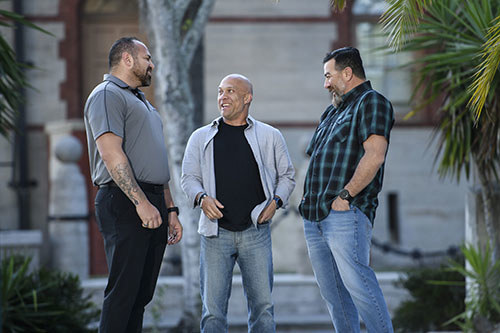 |
| Army veteran Joe Stabley credits his family, organizations like WWP, and connection to fellow veterans with helping save his life. |
WWP provides programs and services that support warriors and their families across multiple areas of well-being, including mental health, connection, physical health, and career and financial wellness. Veterans do not need to wait for a crisis to seek help, and they can continue exploring options until they find support that works for them.
Joe’s story shows that healing may take time, but a fuller life can still be waiting on the other side.
Today, Joe says life is not perfect, but it is far better than he once imagined. He finds joy in being a husband and father, spending time with his family, traveling, and serving others as a Physician Assistant.
“I’m living a dream now,” Joe said. “Things aren’t perfect, but they’re definitely so much better than they were.”
He wishes people in their darkest moments could see the future that may still be available to them if they keep taking the next step.
“By asking for help, you really have the opportunity to rewrite the next chapters in your life,” Joe said. “Trying to go about it alone is the wrong answer.”
Joe’s experience points to a central lesson of prevention: Support is most effective when connection and practical help are in place before a crisis begins.
“Anybody who has survived an attempt or has gone through years off and on with ideation — and is still here and thriving now — is a living testimony to what’s possible,” Joe said.
*Warrior Survey, Wave 3 (conducted June 15 - Aug. 24, 2023)
Learn more about veteran suicide prevention and how WWP can help.