
 Twenty-five years after the attacks of Sept. 11, 2001, a generation that came of age in the shadow of that day is now carrying its legacy forward. Some were already in uniform. Some were sitting in classrooms, too young to enlist but old enough to understand that the world had changed. Others were beginning careers, building families, or imagining futures that would soon be reshaped by war, sacrifice, recovery, and a renewed sense of purpose.
For younger generations who were not alive on 9/11, the day itself may feel like history. But the people shaped by that moment were young once, too. Their stories offer a human bridge between what happened then and what service and resilience can mean now.
Wounded Warrior Project® (WWP) was created in 2003 to meet the urgent needs of a generation returning home from war with seen and unseen wounds. WWP® began by delivering comfort items to warriors in military hospitals and has since grown into a national community dedicated to helping veterans, service members, and their families find support.
Whether they joined because of 9/11, continued serving because of it, or returned to the military after it, each of these six warriors became part of the “Class of 2001” — a generation whose lives were changed by a single morning and whose commitment to others continues long after their uniforms came off.
Mike Matthews: 21 years old on Sept. 11, 2001
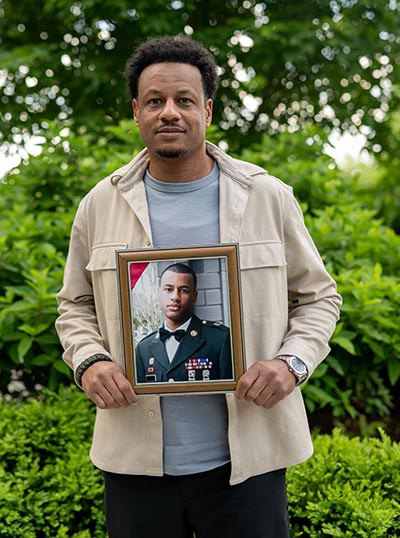
Mike Matthews grew up in a military family, but military service was not something his family talked about regularly. When he joined the U.S. Army in 1998, he did not think of it as a lifelong mission. That changed once he put on the uniform.
“It wasn't necessarily a calling,” he said. “But once I got in the military and I was serving, I knew it was a calling. I needed to do it, and I knew it was something that I could excel in and that I wanted to be a part of.”
On Sept. 11, Mike was at the National Training Center at Fort Irwin, California, preparing to return home after weeks of training. Instead, the attacks grounded his unit and sharpened the reality of what they had been preparing for — the possibility of war.
“This is what you signed up for,” he remembers thinking. “This is what we’ve been training for.”
The years that followed took him to the Middle East three times. On his third deployment, in Iraq, the vehicle he was riding in hit an improvised explosive device (IED), leaving him with a broken jaw, severe burns, and other injuries. He woke up in the hospital two weeks later with his jaw wired shut, facing a recovery that would test the same sense of mission that carried him into service.
After leaving the military, Mike struggled with post-traumatic stress disorder (PTSD) and increasingly isolated himself from others. After attending a WWP event, Michael started to feel the camaraderie he had missed in service and began a journey that would greatly improve his physical and mental well-being.
Today, Mike sees sharing his story as another form of service.
“A lot of warriors feel like they’re the only ones going through something,” he said. “When we share our stories, they realize that there are others going through the same thing. They’re not alone.”
Antoinette Wallace: 16 years old on Sept. 11, 2001
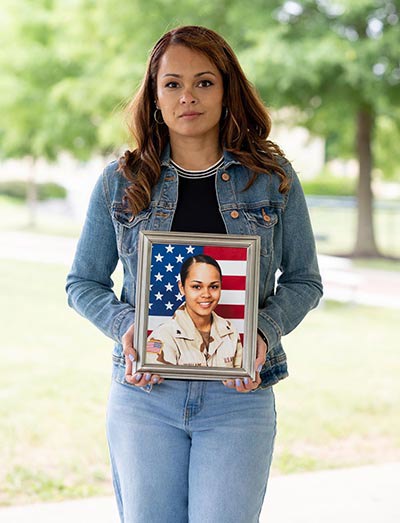
Antoinette Wallace was a high school student in Staten Island, New York, when the towers fell. The attacks were not distant images on television; they were happening to her city, to people and places she felt connected to.
Before that day, Antoinette had never seriously considered military service and knew little about military life. But the helplessness she felt watching the attacks unfold turned into a determination to act. When she graduated from high school at 17, she got her parents’ permission, visited an Army recruiter, and enlisted.
“I knew I had to serve,” she said. “After I watched the towers fall on 9/11. It felt like a calling. Like something I needed to do to make sense of what happened to my loved ones, my city.”
After spending a year in the Army National Guard, Antoinette’s unit was called to active duty, and she deployed to Iraq in 2004. Nearly nine years later, Antoinette left the Army. However, the transition to civilian life proved more challenging than she predicted.
“I knew I was not well, that something was wrong, but I didn’t know how to verbalize it,” said Antoinette, who was diagnosed with depression, anxiety, and PTSD.
After reaching out for help, Antoinette became a pharmacist and built strong relationships with other veterans who understand what she’s gone through. Today, Antoinette values the connections she’s made with other warriors and continues to serve by sharing her story.
“My mindset changed from a place of shame about things that happened in my life to empowerment,” she said. “Speaking gave me a platform to not only recover by getting my story out there, but it was an opportunity to meet other veterans and become more actively involved with a cause to help bring about needed change. It gave me that sense of purpose again that I had been missing for a long time.”
Matthew Templeton: 15 years old on Sept. 11, 2001
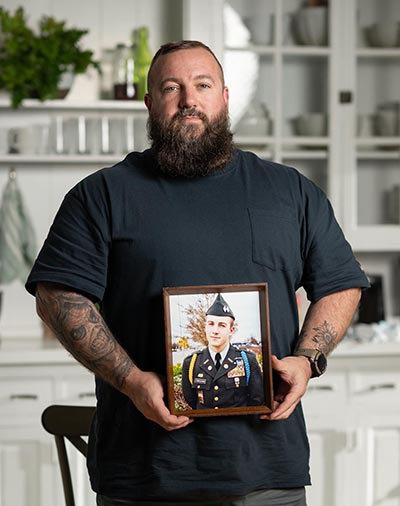 Matthew Templeton had long imagined a future in the military. As a kid, he prepared through Civil Air Patrol and Army JROTC. When he was still in high school, the attacks of Sept. 11, 2001, made that path feel even more certain. He enlisted in the Army Reserve in 2003 and transitioned to active duty the following year.
While teaching air assault techniques during a deployment in northern Iraq, Matthew suffered a serious fall that fractured vertebrae in his neck and back. He also returned home with a traumatic brain injury (TBI) and PTSD. After being medically discharged from the military he loved so much, Matthew lost his sense of purpose.
Through participation in WWP Alumni events and Project Odyssey, Matthew regained the camaraderie he had been missing. He found a community of fellow veterans who understood the isolation and challenges he was facing. Connecting with other veterans again helped him change the way he understood service, recovery, and the importance of community.
“Today. I'm there for others by trying to show up,” Matthew said.
Matthew continues to give back by serving as a peer mentor and support group leader for WWP and living the WWP logo of one warrior carrying another.
“When we give what we have to others, we get it back multiplied,” he says. “I love seeing warriors who once needed to be carried become the ones carrying others. That’s the ripple effect.”
Keara Torkelson: 13 years old on Sept. 11, 2001
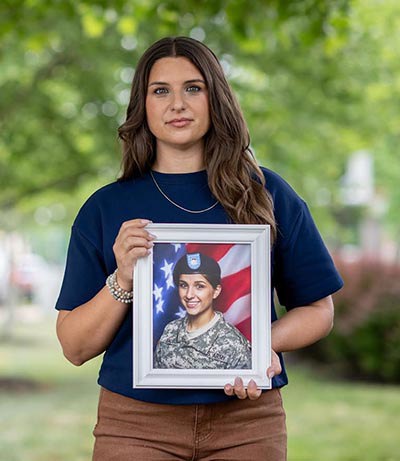
Keara Torkelson was only in seventh grade on 9/11, but the images and emotions of that day remain vivid more than two decades later. She remembers watching the news coverage in her middle school classroom.
“The sense of dread and heaviness was so palpable,” Keara said. “… I was just so blown away because that isn't something I had experienced up until that point or seen, and it was just so remarkable to see people running toward danger instead of away from it.”
Years later, when she joined the military in 2006, she was looking for discipline and direction — but also for the chance to be part of something special.
“To me, [the military] represents being a part of something bigger than myself, living selflessly and feeling honored to wear the same uniform that so many brave men and women before me have worn, and to be a part of that legacy,” Keara said.
Before she could deploy to Iraq, Keara’s military career was forever changed. In 2009, a fellow soldier opened fire on fellow service members in a mass shooting at Fort Hood, Texas. Keara was among those wounded, suffering a gunshot wound to her back and a graze wound to her head.
After the shooting, Keara continued to serve for four more years before being medically retired. She left the military with physical injuries and PTSD, but despite the pain and trauma she endured, Keara said she would make the same decision to serve the country.
“As painful as a lot of the times were in the military, I would absolutely do it again a hundred times over,” Keara said. “It's given me this platform to connect with warriors in a way that I never would have been able to if I didn't have those experiences. …”
Today, Keara is raising a family and continuing to serve by sharing her story and keeping other veterans connected, particularly the growing population of women veterans.
“I 100% believe every time I do something for someone else, it fills my cup and it helps me in ways that are hard to explain,” Keara said.
Chris Hoff: 33 years old on Sept. 11, 2001
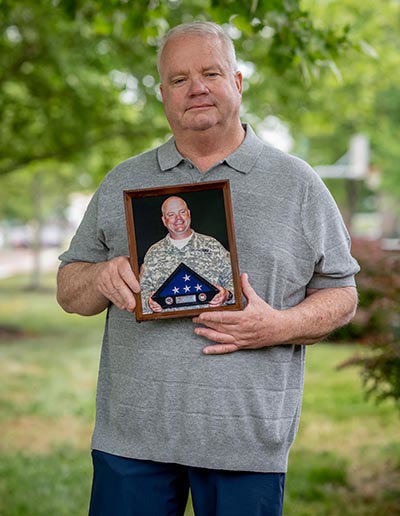 Chris Hoff had already served eight years in the military before 9/11. He left the service in 1994 and worked as a correctional officer while going to school to become a teacher. Then he watched the attacks of 9/11 unfold and felt the pull to return.
“I just felt that I needed to serve again,” he said.
Chris returned to uniform and deployed to Afghanistan in 2004. During training, the Humvee he was riding in rolled over, resulting in a TBI. Just days later, six soldiers from his unit were killed. Throughout his deployments, he also volunteered for difficult assignments, including delivering the bodies of locals who had been killed to their families.
“I am not a hero, but I served with tons of heroes who did their job every single day, without recognition or without an ounce of fear,” he said.
His experiences contributed to PTSD, but transitioning back to the civilian world proved difficult.
“I thought I had nothing to live for,” Chris said. “I contemplated taking my own life.”
During this difficult time, Chris attended an equine therapy workshop through WWP, which he credits with saving him. Since then, Chris has made it a mission to be there for other veterans and encourage them to reach out for help if they need it.
“I'll always show up for others because , without question, people showed up for me,” Chris said.
Carla Best: 25 years old on Sept. 11, 2001
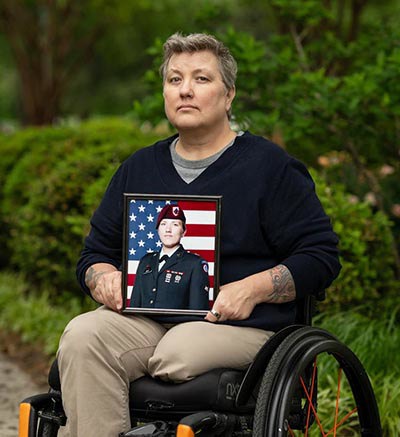
Carla Best comes from a military family and always saw service as part of her legacy. She joined the Army a year before the 9/11 attacks, embracing a path she felt called to follow.
“When I raised my right hand and took the oath, I knew what I wanted to do,” she said. “I was very proud to sign up for the military.”
In 2004, while traveling in a convoy in Iraq, the vehicle Carla was riding in was struck by an IED. The blast severely injured both of her legs and led to the amputation of her left leg. She also sustained a TBI, hip fractures, and burns.
When Carla returned home, the physical wounds were only part of her recovery. She struggled with PTSD, suicidal thoughts, isolation, and opioid dependency before finding a turning point through WWP’s Adaptive Sports program. Sled hockey, in particular, gave her a new outlet, a new community, and another way to encourage other veterans to keep showing up.
“I think that it’s really important for everybody to try to get their stories out there, because you never know who you’re going to connect with,” Carla said.
Carla is also involved in WWP’s advocacy efforts, supporting legislative change that improves the lives of veterans and their families.
“I’m going to keep showing up in every way that I can to uplift other veterans in my community,” Carla said.
A Generation Still Carrying the Mission Forward
Twenty-five years later, the legacy of 9/11 is measured not only in memories of that day but also in the lives shaped by what came after. For these warriors, service did not end with leaving the military. It continues through recovery, connection, advocacy, mentorship, and the willingness to help someone else take the next step.
Their ages on Sept. 11, 2001, vary from middle school to adulthood. Their paths into service were different. But seen together, these stories show how one day shaped a generation — and how that generation continues to shape the ones coming after it.
For young people who know 9/11 only as history, the “Class of 2001” is a reminder that service often begins with ordinary people at ordinary ages choosing to respond to extraordinary moments in extraordinary ways.
Today, they are still showing up — for each other, for the next generation, and for every warrior who needs to know they do not have to carry the weight alone.
Watch Warriors Share Their Stories of Service After 9/11
Heart of the Warrior | Antoinette Wallace
Warrior and U.S. Army National Guard veteran Antoinette Wallace shares why she chose to serve her country after the attacks on 9/11.
Heart of the Warrior | Matthew Templeton
Warrior and U.S. Army veteran Matthew Templeton shares why he answered the call to serve after 9/11.
Heart of the Warrior | Michael Matthews
Warrior and U.S. Army veteran Michael Matthews shares why he continues to serve his community and fellow veterans.
Heart of the Warrior | Chris Hoff
Warrior and U.S. Army veteran Chris Hoff returned to military service following the attacks of 9/11. Now, he continues to serve his fellow veterans.