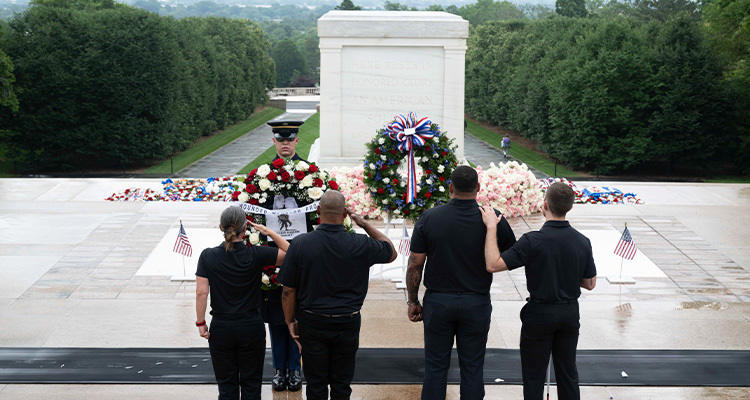
Four people salute during a wreath-laying ceremony at a tomb_750x400

Letter from Our VP

250th Anniversary: Reflecting on Service, Leadership, and the Work Ahead

As our nation continues its journey toward the 250th anniversary of its founding, it is worth reflecting not only on the ideals that gave birth to America, but also on the leadership required to preserve and strengthen them.  That reflection felt especially meaningful this Memorial Day, as warriors from across the country participated in the National wreath-laying ceremony at Arlington National Cemetery to honor those who gave their lives in service to our nation.

Memorial Day is a solemn reminder of the cost of freedom. It calls us to remember the men and women who did not return home, to stand beside the families who carry their loss, and to recommit ourselves to those who continue to live with the visible and invisible wounds of war.

In that spirit, I have found myself reflecting on George Washington, not only as the first commander in chief and first president, but as a leader whose example still offers lessons for our work today. Washington’s leadership was defined not by perfection, but by discipline, judgment, restraint, and a deep understanding that leadership is ultimately about service to something larger than oneself.

Three of George Washington’s traits stand out to me as especially relevant to advocacy today.

The first is his ability to remain visionary and strategic while never losing sight of the tactical work required to achieve results. Washington understood that success requires planning, persistence, execution, and attention to the details that turn broad aspirations into real outcomes.

That same balance is essential in our work at WWP. We believe meaningful change rarely happens through vision alone. It happens when vision is matched with disciplined, daily effort.

That’s why we remain focused on ensuring that Service members, veterans, and wounded warriors receive the care, support, benefits, and opportunities they have earned. Our advocacy efforts – meeting with lawmakers and staff, building bipartisan support, preparing warriors to share their stories – remain a top priority, enabling us to effectively push critical legislation across the finish line.

The second trait is Washington’s ability to build consensus. He understood that durable progress required bringing people together, even when perspectives differed and the path forward was difficult.

That lesson is central to effective advocacy. At WWP, progress depends on building coalitions among veteran and military service organizations, local communities, lawmakers, caregivers, and advocates. The issues facing our brothers and sisters in arms – and their families – are too important to be limited by partisanship or organizational silos.

We see that consensus-building in action as Congress continues working through several of our legislative priorities. The Major Richard Star Act remains one of the most important efforts to ensure that combat-injured retirees receive the full benefits they have earned. This bill represents more than a technical correction in law; it is about fairness, recognition, and keeping faith with those whose military service was cut short because of combat-related injuries.

We are also continuing to advocate for expanded access to important treatment options. Legislation like the ACCESS Act advances innovative approaches for conditions such as post-traumatic stress, traumatic brain injury, chronic pain, and other challenges affecting the warriors we serve.

Finally, we are encouraged by the House passage of the Sharri Briley and Eric Edmundson Veterans Benefits Expansion Act to expand support for severely disabled veterans, surviving families, and certain Guard and Reserve members. This piece of legislation will strengthen the safety net for those who sacrificed the most by providing meaningful financial support and long-term stability for veterans, caregivers, and surviving family members.

The third trait is Washington’s humility and self-awareness. Though he became one of the most powerful figures of his time, Washington understood the importance of restraint, responsibility, and servant leadership. He recognized that leadership was not about personal recognition, but about duty.

That recognition is a powerful reminder for all of us. Warriors are leaders in their communities, their states, and across the country. Their voices carry weight because they are rooted in service and sacrifice. But the purpose of advocacy is not to elevate ourselves. It is to serve the warrior struggling to access care, the caregiver who feels unseen, and the family navigating transition, so that the next generation of Service members know that this country will keep its promises.

As we honor those we lost and look ahead to America’s 250th anniversary, we should draw strength from Washington’s example: lead with vision, build consensus, and remain grounded in humility. These traits are not relics of history – they are tools for the work before us.

At WWP, we will continue to bring warriors, families, advocates, and policymakers together to advance solutions that matter. We do this not only in memory of those who gave all, but in service to those still carrying the weight of war, and in pursuit of a nation worthy of their sacrifice.

Jose Ramos, Vice President, Government and Community Relations

Legislative Updates

On the Hill: Legislative Updates Impacting Warriors

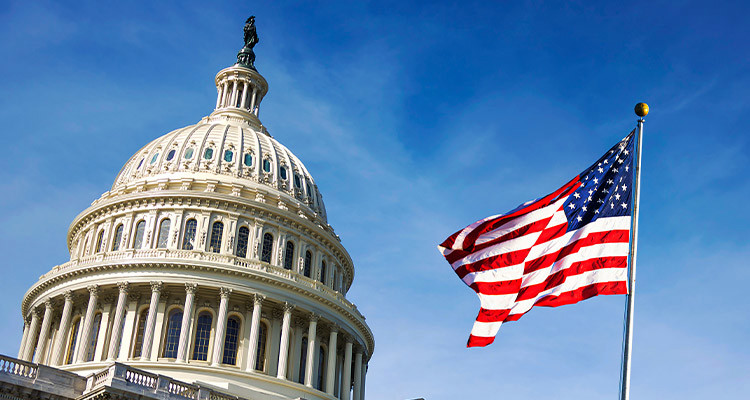
American Flag and US Capitol Building_750x400

Legislative Priority: The Major Richard Star Act

H.R. 2102 / S. 1032: The Major Richard Star Act

Wounded Warrior Project® (WWP)’s top legislative priority, the Major Richard Star Act, would allow combat-injured veterans who were forced to medically retire before 20 years of service to receive their full disability and retirement benefits. Currently, roughly 59,000 veterans across the country have their retirement pay reduced, dollar-for-dollar, by their disability pay.

The Major Richard Star Act was introduced in the House of Representatives by Rep. Gus Bilirakis (R-FL-12) and in the Senate by Sen. Richard Blumenthal (D-CT). WWP is working with Congressional offices to ensure that the Major Richard Star Act is passed before the end of the year.

What Warriors Can Do

To spearhead advocacy efforts with warriors and different Veteran Service Organizations, WWP helped create the Star Act Alliance. The alliance website has many resources about the bill, including talking points and fact sheets. Warriors can also take action by sending messages of support for the Major Richard Star Act to their members of Congress.

In addition, WWP is working with state legislatures to introduce resolutions calling on Congress to pass the Major Richard Star Act. Currently, 15 states have introduced Major Richard Star Act resolutions, with five states passing them: California, Iowa, Kentucky, Louisiana, and Pennsylvania. A state resolution map is available on the Alliance webpage, along with resources and tools to help introduce a resolution in each state.

Legislative Priority: Severely Wounded, Ill, and Injured

WWP is advocating for three bills focused on prosthetics and adaptive sports.

H.R. 1971 / S. 3138: Veterans Supporting Prosthetics Opportunities and Recreational Therapy (SPORT) Act

Current law restricts VA from providing recreational prosthetics unless deemed a “direct and active component” of medical treatment, not merely for comfort, convenience, or the opportunity to pursue health activities that go beyond a specific rehabilitation plan. The Veterans SPORT Act expands VA coverage by adding sports and recreational prosthetics to VA’s standard medical services, removing the need for special permission.

The House bill, H.R. 1971, introduced by Rep. Mariannette Miller-Meeks (R-IA-1), is awaiting consideration by the full House Committee on Veterans’ Affairs. The Senate bill, S. 3138, introduced by Sen. Jim Banks (R-IN), was approved by the Senate Committee on Veterans’ Affairs on March 18, marking an important step forward.

Warriors are encouraged to send a message of support for the Veterans SPORT Act to their members of Congress.

H.R. 1364 / S. 1726: Automotive Support Services to Improve Safe Transportation (ASSIST) Act

Current law limits the automotive adaptive equipment that VA can provide to disabled veterans. This can result in veterans who require more complex or unique adaptations to their vehicles due to their service-connected disabilities being forced to pay out of pocket or utilize adaptations that are not ideal for their transportation situation.

The ASSIST Act gives VA the authority to provide more types of adaptations than currently allowed by law. Some of the new authorized adaptations include lowered floors, ramp and kneeling systems, occupied and unoccupied mobility lifts, ingress or egress accessibility modifications, and adapted seating, adding to a list that already includes van lifts, raised roofs, air conditioning, and wheelchair tiedowns.

The House bill, H.R. 1364, introduced by Rep. Tom Barrett (R-MI-7), went through the committee process and was approved by the House in May 2025. In March 2026, the Senate Committee on Veterans’ Affairs approved a different version of the bill, S. 1726, originally introduced by Sen. Tommy Tuberville (R-AL). WWP will be working to align the two versions and have the final bill approved by Congress later this year.

H.R. 3219 / S. 4156: Gaining a Meaningful Experience from Service (GAMES) Act

The GAMES Act, introduced by Rep. Brian Mast (R-FL-21) in the House and Sen. Jim Banks in the Senate (R-IN), would expand eligibility for veterans to participate in both the Warrior and Invictus Games by allowing them to participate beyond their first year of retirement.

By expanding eligibility beyond their first year, the GAMES Act aligns policy with veterans’ real-world experiences. Adaptive sports are a proven tool for supporting long‑term physical recovery, mental well‑being, and community connection. Ensuring that veterans can engage in high-level competition sports when they are ready strengthens outcomes for veterans and honors their service long after they leave uniform.

The House version, H.R. 3219, has been referred to the Committee on Armed Services, while the Senate bill, S. 4156, was referred to the Committee on Veterans’ Affairs.

Legislative Priority: Brain Health and Traumatic Brain Injury

WWP is also leading the charge in advocating for brain health among the veteran population.

H.R. 8115 / S. 800: Precision Brain Health Research Act

Rep. Mariannette Miller‑Meeks (R‑IA-1) has introduced the House version of the Precision Brain Health Research Act, H.R. 8115.

The Precision Brain Health Research Act highlights growing concern that repeated exposure to low‑level blasts — often experienced during training or combat — may contribute to lasting brain and mental health conditions. The bill would enhance VA’s capacity to conduct sustained, evidence‑based research that improves understanding of these injuries and informs how they are identified and treated over time.

H.R. 8115 was introduced on March 26 and has been referred to both the House Committee on Veterans’ Affairs and the House Committee on Armed Services. The companion bill, S. 800, introduced by Sen. Jerry Moran (R-KS), was approved by the Senate Committee on Veterans’ Affairs last year and awaits consideration by the full Senate.

Both bills are a top priority for WWP, and warriors are urged to send messages of support for the bills to their members of Congress.

To further advance the bill, WWP joined Rep. Miller-Meeks in publishing an op-ed on the importance of studying brain health for Service members and veterans and pushing for passage of the Precision Brain Health Research Act. The op-ed, published in Stars and Stripes, is printed below.

ABOUT THE AUTHORS: Mariannette Miller-Meeks, a Republican, represents Iowa’s 1st Congressional District in the U.S. House of Representatives. Jen Silva is the chief program officer of Wounded Warrior Project.

“I began to fall into a depression, believing that I was a burden and that the meaning I had built my life around — service, responsibility, and usefulness — was lost.”

With those words, Marine Corps veteran Buster Miscusi described a reality far too familiar to many veterans. Despite diagnoses, medications, and appointments, his life was unraveling under the weight of severe headaches, cognitive decline, emotional instability, and a mind that no longer functioned the way it once had prior to his injury in uniform. His story resonated deeply as he testified before the House Committee on Veterans’ Affairs subcommittee on Health in March, illuminating the hidden brain injuries as a result of his service that reshaped his life.

Buster is not alone. His experience reflects the growing understanding that traditional definitions of brain injury have not kept pace with the demands and exposures of modern military service. For decades, traumatic brain injury (TBI) meant only one thing: a severe blast that caused someone to black out and left obvious, visible signs of injury. Just as critical, and completely unseen at the time, were the invisible injuries caused by low-level blast pressure. This is exactly what Buster described as he recounted his service. He had never been knocked unconscious by an explosion and never imagined he could have a TBI.

What he experienced was something far more common and far less understood: years of repeated exposure to blast overpressure. Thousands of mortar rounds. Countless detonations. Low-level blasts once considered routine and harmless. Headaches were dismissed. Confusion was minimized. Symptoms were often attributed to stress or culture rather than injury.

Today, emerging science is validating what veterans like Buster have long described. Brain injuries do not always result from a single event. Repeated low-level blast exposure can cumulatively disrupt brain function, leaving lasting cognitive, emotional, and neurological effects. Yet despite growing evidence, research has not fully translated into the answers, diagnostics, and treatments veterans urgently need.

Providers are doing their best within the bounds of current science, but a gap remains between the lived experiences of veterans and the medical certainty needed to diagnose and treat these invisible injuries effectively.

That gap was brought into sharp focus during the Subcommittee on Health’s recent hearing, when veterans spoke openly about years of misdiagnosis, frustration, and decline before finally receiving appropriate care. Their testimony was clear: research, policy, and practice must evolve to reflect the consequences of modern military service and modern warfare.

Similarly, as veterans began to experience post-traumatic stress disorder, the invisible wounds of service were dismissed or mischaracterized because science had not yet caught up with the lived experiences of those who served. Only after listening to veterans did the nation — and the Department of Veterans Affairs — begin to recognize PTSD as a legitimate, diagnosable condition that demanded research and treatment and could be cured, or at the very least mitigated so that veterans can live comfortably after their service in uniform.

The effects of TBI deserve the same attention from a modern VA. Evidence is already emerging that injuries caused by repeated, low-level blast exposure carry real and lasting consequences on a veteran’s overall health.

In coordination with the Department of War — and VA — today’s service members do have access to better prevention and exposure tracking as a result of their military service. However, for the thousands of post-9/11 veterans already living with the effects of repeated blast exposure we must continue to raise awareness on this issue and ensure that VA, and DOW, have the right tools at their disposal to continue to effectively research, track, and treat brain injuries.

The Precision Brain Health Research Act builds on that progress. With our backing, this bill would direct the VA, in partnership with the National Academies, to continue to look at how repetitive, low-level blast exposure affects veterans’ brain function. Its goal is to deepen understanding of blast exposure, improve diagnostics for patients, and better equip clinicians to care for today’s and tomorrow’s veterans — like Buster — who will live with these injuries.

Through access to programs like UCLA’s Operation Mend, Wounded Warrior Project’s Warrior Care Network, and supported by VA, Buster Miscusi and thousands of other veterans living with brain injuries can get the care that recognizes the reality of their brain injury. Buster’s symptoms did not disappear, but they were understood. By developing a comprehensive treatment plan that worked for Buster and his family, his injury from his military service was better understood, and treated as a survivable wound — not a death sentence.

That care, attention, and understanding gave Buster his life back. We must continue to build up programs like these — both inside and outside VA — so that veterans like Buster can access the care they need to live their lives to the fullest.

Modern warfare has changed, and the resources service members and veterans rely on both in uniform and after they hang up their uniform must evolve with it. Brain health is not a niche concern; it affects readiness, long-term health, family stability, and the futures of those who have served.

The wounds may be invisible, but the responsibility to address them is not.

America’s veterans served without hesitation. Our nation has an obligation to ensure that science, care, and policy meet veterans where they are, so that no veteran is left struggling in the dark with an injury from their service that we have the power to understand.

Mental Health and Suicide Prevention

Beyond Awareness: Real Solutions for Veterans

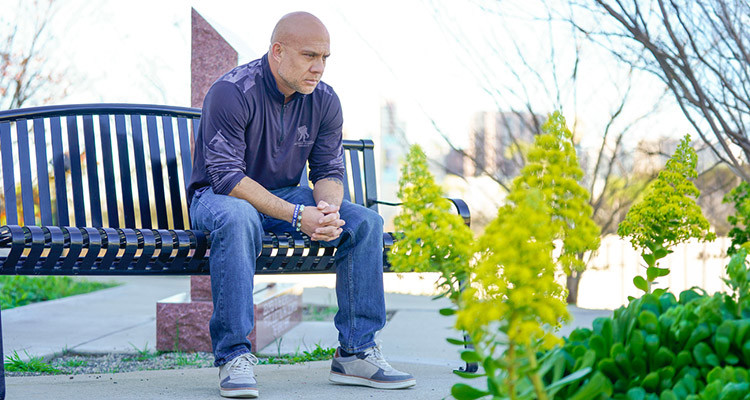
Warrior Joe Stably sits on a park bench_750x400

In Focus: Mental Health and Suicide Prevention

One of WWP’s key legislative priorities focuses on mental health and suicide prevention, including Post Traumatic Stress Disorder (PTSD). Mental health conditions continue to be among the top service-related health issues reported by WWP warriors. In WWP’s latest Warrior Survey, 80% of WWP warriors reported anxiety, 77% reported PTSD, and 28% reported experiencing suicidal thoughts in the past year.

WWP is leading efforts to find multiple treatments to cure PTSD. In 2025, we provided warriors and family members with more than 76,000 hours of treatment for PTSD and other mental health conditions like traumatic brain injury (TBI), substance use disorder (SUD), and military sexual trauma (MST).

To support our programming and research around mental health, the Government and Community Relations team is advocating for legislation across three different areas.

1. Suicide Prevention and Resiliency Building

One of WWP’s approaches is to expand access to non-clinical support — including peer support networks and early intervention services that protect against suicide and support veterans’ whole health. These programs connect veterans with their peers who understand their experiences and can assist them when their problems become severe. Community-based programs are especially valuable in this space because they are local, trusted, and easier for veterans to access.

Strengthening the Staff Sergeant Parker Gordon Fox Suicide Prevention Grant Program through the bipartisan HOPE for Heroes Act (S. 1139) represents an important step toward sustaining and expanding VA’s community-based suicide prevention efforts. The bill would expand the program through 2030, increase grant funding, and improve coordination between community organizations and VA. The bill also calls for, among other provisions, enhanced training requirements and support for veteran transportation.

Peer support is another key part of WWP’s strategy. Veterans often feel more comfortable talking to other veterans. WWP supports the PFC Joseph P. Dwyer Peer Support Program Act (H.R. 438), which would provide grants to states and local entities to strengthen and expand peer support programs. Community-based organizations help build trust and reduce isolation, making it more likely that veterans will seek and receive help. In addition, they are often best positioned to connect with veterans who may not engage with traditional care systems

2. Innovative and Emerging Therapies

Ending veteran suicide remains tragically elusive. Based on the most recent annual data shared by VA, our nation lost 6,398 veterans to suicide in 2023. However, psychedelic-assisted therapy — provided within U.S. borders and through VA — can become the next beacon of light for those hoping to overcome their mental health struggles.

A small population of veterans drop out of traditional mental health care or do not improve with standard treatments. That’s why WWP and others are calling for accelerated access to evidence-based mental health treatments, expanded research on psychedelic-assisted therapies, and the elimination of policy barriers that prevent veterans from getting the care they deserve.

The most effective solutions will come from federal agencies, such as the Drug Enforcement Agency and the Food and Drug Administration, working together. However, Congress can support these efforts by passing the Innovative Therapies Centers of Excellence Act (H.R. 2623). The bill would require VA to designate at least five “innovative therapies centers of excellence” and direct them to conduct research on the safety and efficacy of innovative therapies, including MDMA, psilocybin, ibogaine, and ketamine, as treatments for PTSD, anxiety, depression, and many others.

3. Access and Affordability

While effective treatments exist for mental health conditions like PTSD, depression, and substance abuse disorders, veterans may struggle to access them. There may not be enough providers, or wait times may be too long. Some veterans also face challenges with costs, transportation, or care coordination.

One important type of care is residential rehabilitation treatment programs (RRTPs). These programs provide structured, live-in treatment for veterans with serious mental health conditions. They are designed for veterans who are stable but still need intensive support. RRTPs can address both medical and social needs, such as housing and employment.

However, access to these programs is limited. Demand for this level of care exceeds the supply of RRTP beds — both at VA and in the community — available at any given time. In addition, not all programs can treat multiple conditions at once, such as PTSD and substance use disorder together.

VA has taken some steps to improve this situation, but more work is needed to ensure all veterans can access care when they need it. The Veterans’ ACCESS Act (H.R. 730, S. 275) would require better tracking of wait times and bed availability, as well as higher standards for care quality. It would also improve coordination between programs and provide transportation support. These changes are meant to ensure veterans receive timely, high-quality care and do not fall through the cracks.

WWP believes veterans deserve timely, effective, and personalized mental health care. By strengthening community support, investing in new treatments, and improving access to intensive care programs, Congress can help save lives and support veterans on their path to healing.

Congressional Testimony

WWP CEO Testifies Before Congress on Veterans’ Priorities

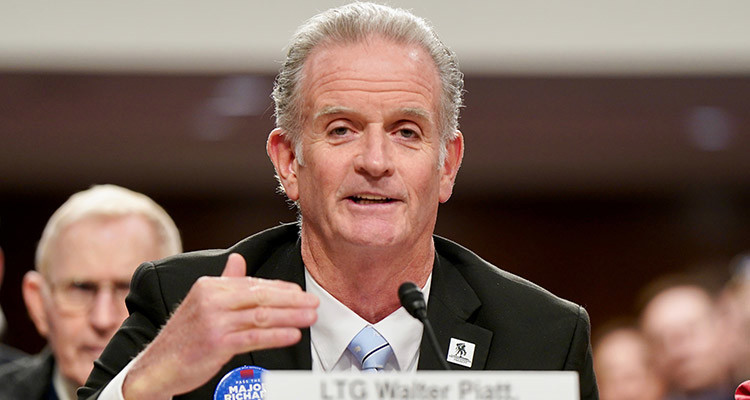
WWP CEO Walt Piatt speaks at Congressional Testimony_750x400

On March 4, WWP CEO Lt. Gen. (Ret.) Walt E. Piatt testified before the Senate and House Committees on Veterans’ Affairs. This annual joint hearing allows Veterans Service Organizations (VSOs), such as WWP, to inform Congress about veterans’ needs and which legislation most effectively supports the veteran community.

During his testimony, Piatt shared WWP’s top legislative priorities for the year, including passage of the Major Richard Star Act. Piatt underscored the urgent need for Congress to pass this vital legislation that would ensure veterans forced to medically retire due to combat-related injuries receive the benefits they earned. “Most are young men and women, not even close to retirement years,” said Piatt. “They must come to terms with the life they thought they would have and embrace a new path they never imagined, and we cannot punish them for the sacrifices they made on the battlefield.”

In addition to the Major Richard Star Act, Piatt also highlighted additional bills that warriors advocated for during the 2026 Operation Advocacy Fly-In that occurred the week before:

  • Innovative Therapies Centers of Excellence Act (H.R. 2623), which would establish at least five VA Centers of Excellence dedicated to innovative mental health treatment to support veterans experiencing mental health challenges such as PTSD, depression, and trauma from military sexual assault.
  • Housing Unhoused Disabled Veterans Act (H.R. 965, S. 1415), which would help ensure homeless veterans, as well as those at risk of homelessness, are not turned away from housing assistance due to receiving service-related disability compensation.

During the Q&A period with members of the Veterans’ Affairs Committees, Piatt fielded a wide range of questions, including the importance of the Major Richard Star Act; why preregistration for VA health care is important during the transition from service; the importance of timely access to effective mental health care through VA; the needs of women veterans; alternative mental health treatments; and housing eligibility for disabled veterans. The breadth and depth of questions directed to WWP demonstrate the growing role WWP is taking in helping to educate members of Congress about veterans’ issues.

The annual hearing sets the stage for WWP’s legislative work in 2026. Read Walt’s full written testimony, and learn about WWP’s legislative priorities.

Operation Advocacy Fly-In

On the Hill and Making Waves: 2026 Operation Advocacy Fly‑In Highlights

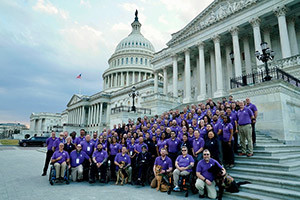
In late February, more than 115 warriors from 45 states assembled in Washington, DC, to participate in the 2026 Operation Advocacy Fly-In. This annual gathering brings warriors together with their elected officials to share their stories and advocate for policies that strengthen support for veterans nationwide.

WWP Warriors on the steps of the Capitol building during fly-in_300x200More Than Just Congressional Meetings 

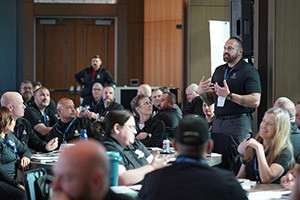
While the focus of the fly-in is meeting with members of Congress, the event also includes advocacy training, professional development, and team building for all participants.

WWP staff led legislative “deep dives” on each priority bill the warriors would be advocating for on Capitol Hill. The three priority issues and bills for this year’s fly-in were:

  • Major Richard Star Act (H.R. 2102, S. 1032)
  • Mental Health and Suicide Prevention, and the Innovative Therapies Centers of Excellence Act (H.R. 2623)
  • Veteran Homelessness, including the Housing Unhoused Disabled Veterans Act (H.R. 965, S. 1415)

“I get the most out of the in-depth training on the bills being covered during the fly-in. I can read a bill and see who has cosponsored and where it is in the legislative process myself,” said Warrior Advocate Leader (WAL) Elizabeth Dykstra from Illinois. “Hearing from WWP experts on how the bill came to be and getting the statistics to support it prepares me to go into the meetings with confidence.”

Warriors during Operation Advocacy Fly-in.jpgProfessional Development

Policy discussions then led to professional development workshops aimed at strengthening warriors’ leadership, research, and communications skills.

David Sperry with OpenAI for Government gave an eye-opening presentation on how warriors can use ChatGPT and optimize AI capabilities and functionalities to enhance their advocacy efforts - helping them better organize ideas, communicate messages, and stay engaged on issues that matter most to the veteran community.

The importance of storytelling was highlighted by Dr. Jeanine Turner of the McDonough School of Business at Georgetown University, who has explored the use of communications technologies for the past 25 years. Warriors left this session feeling confident about how best to share their stories authentically and effectively to better advocate for the priority bills.

WWP was joined by several guest speakers during the event. Fox News Chief National Security Correspondent Jennifer Griffin welcomed warriors to the event and talked about her experiences as an embedded war correspondent. Another highlight was the speech by VA Under Secretary for Memorial Affairs Sam Brown.

Warriors Brenda Lowe Rosalind Johnson Todd Lehman Kenneth Hummel and Steve Lowe_300x200On Capitol Hill

On the big day, participants were divided into 25 teams, with each team meeting with five to seven offices. Each team was led by a Warrior Advocate Leader with previous advocacy experience who helped introduce newcomers to the process and how the day would unfold.

Warriors met with nearly 150 congressional offices, sharing their experiences and advocating for key priorities, including the passage of the Major Richard Star Act, expanded research into innovative therapies for mental health care, and the end of veteran homelessness. After just a few meetings, many warriors were already getting used to them, and the awe and anxiety of being on Capitol Hill gave way to newfound confidence and assuredness.

For many warriors, speaking with their members of Congress was a new but critical way to support their community. “The fly-in is so important because it allows for elected officials to speak directly with their veteran constituents,” said WAL Perry Cooke from Kentucky. “They need to know not just how these things impact the lives of veterans and their families, but also what the impact is on the community that they represent at large.”

The day was long and exhausting but also inspiring and exhilarating. At the end, all participants gathered on the Capitol steps for the traditional end-of-day photo, marking another successful fly-in.

“Grassroots advocacy ensures that policy decisions are informed by real-world experiences and also gives individuals a voice at the table,” said WAL Willie Johnson from Louisiana. “It helps bridge the disconnect between those affected by policies and those creating them. It’s about accountability, representation, and making sure no one is overlooked.”

Warriors Raymond Negron Joseph Gucciardi Kimberly Washington and WWP CEO Walt Piatt_300x200The Work Continues

Operation Advocacy Fly-Ins empower warriors to use their voices to drive meaningful change beyond Capitol Hill. Through this experience, warriors build the confidence and skills needed for effective grassroots advocacy. As they return home, they are encouraged to stay engaged, strengthen relationships with elected officials, and continue advocating for the needs of veterans.

“Wounded Warrior Project continues to strengthen and expand its grassroots and constituent affairs program, and this year that evolution culminated in our largest Operation Advocacy to date,” said Adam Engelman, WWP Grassroots and Constituent Affairs Director. “We continue to refine our training programs and curriculum to ensure warriors are equipped not only with the skills they need for meetings in Washington, but with tools they can take back to their districts and states to continue building meaningful, lasting relationships with their lawmakers.”

  • Aaron Kiewicz, Doral, FL 
  • Aaron Myers, Ogden, UT 
  • Adam Long, Sioux Falls, SD 
  • Adonica Heard, Montgomery, AL 
  • Alejandro Tamez, Kansas City, KS 
  • Alex Redcay, Lancaster, PA 
  • Alfredo Moreno, Keaau, HI 
  • Amanda Held, Swanton, OH 
  • Annette Nauenburg, Princeton, TX 
  • Anthony Johnson, Orlando, FL 
  • Anthony Rivera, Zimmerman, MN 
  • Anton Johnson, Missoula, MT 
  • Ariel Basden, Waco, TX 
  • Ashley Trevino, Sherwood, AR 
  • Barry Jeffs, Kearney, NE 
  • Bassheva Trenk, San Antonio, TX 
  • Benjamin Heck, DuPont, WA 
  • Bradley Amborski, Columbus, OH 
  • Brandon Gregory, Morgantown, WV 
  • Brandon Reyes, Conroe, TX 
  • Bravell Smith, El Cajon, CA 
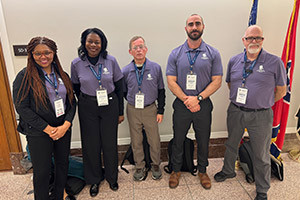
  • Brenda Lowe, Gulfport, MS 
  • Brett Hodges, Davenport, IA 
  • Brett Sobaski, Iowa City, IA 
  • Brooke Weinmann, Columbus, OH 
  • Bruce Cooper, Boise, ID 
  • Carla Best, Aurora, CO 
  • Chris Miller, Hillsboro, MO 
  • Christian Gomez, Attleboro, MA 
  • Christian Nooney, Midland, GA 
  • Christopher Carver, Spokane, WA 
  • Christopher McGrath, Simi Valley, CA 
  • Christopher Walker, DeRidder, LA 
  • Clark Sabo, Camp Dennison, OH 
  • Clinton John, Fremont, NE 
  • Creighton Scott, Conroe, TX 
  • Cristel Oset Barahona, Evansville, IN 
  • Danial Stutz, Vancouver, WA 
  • Daniel Harrington, O’Fallon, MO 
  • Darryl Jackson, Pittsburgh, PA 
  • Daryl Harris, Yemassee, SC 
  • David Sella, Oxford, NC 
  • David Staffa, Clermont, FL 
  • Diana Bourgeois, Reno, NV 
  • Dina Parrott, Lexington, KY 
  • Doug Moore, Chicago, IL 
  • Edith Davis, Virginia Beach, VA 
  • Elizabeth Dykstra, Oswego, IL 
  • Enrique Mendoza, Temecula, CA 
  • EZ Schacht, Grantsville, UT 
  • Forrest Pryde, Farmington, MN 
  • Gabriel Vazquez, Woodbridge, VA 
  • Howard Lowe, Clinton, TN 
  • Isaac Renfro, Fort Worth, TX 
  • Jacob Dowers, Gaithersburg, MD 
  • Jacob Gatrost, Lead, SD 
  • Jacob Welker, Bristol, WI 
  • James Laban, Perris, CA 
  • Jason Davidson, Summerville, SC 
  • Jeffrey Amos, Lincoln, AR 
  • Jeffrey Ferguson, Billings, MT 
  • Jeremy Davis, Colorado Springs, CO 
  • John Oliveira, Bingham, ME 
  • John Tilghman, Dover, DE 
  • Jon Aasted, Vista, CA 
  • Joseph Gracia, Bonita, CA 
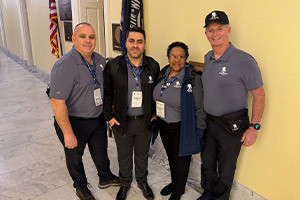
  • Joseph Gucciardi, East Greenbush, NY 
  • Kate Goode, Scottsdale, AZ 
  • Katrina Ellis, Peoria, AZ 
  • Keisha Markey, Jacksonville, FL 
  • Kelly Compas, St. Louis, MO 
  • Kenneth Hummel, Cookeville, TN 
  • Kimberly Washington, Edgewater Park, NJ 
  • Laura Bozeman, Anchorage, AK 
  • Lisa Mayfield, Wichita, KS 
  • Lisa Olivas, Oklahoma City, OK 
  • Lisa Therrien, Laveen, AZ 
  • Louis Goldstein, Dexter, MI 
  • Luis Orozco, Surprise, AZ 
  • Mark McHenry, Albuquerque, NM 
  • Mark O’Loughlin, Santee, CA 
  • Melissa Collins-Gonzalez, Clearwater, FL 
  • Michael Frost, New Castle, PA 
  • Michael Merzke, Chapel Hill, NC 
  • Michael Thomas, Anchorage, AK 
  • Paul Chambers, Sneads Ferry, NC 
  • Perry Cooke, Louisville, KY 
  • Ralph (Scott) Hancock, Tigard, OR 
  • Rana Clark, Chattanooga, TN 
  • Randy Hooper, Alexandria, VA 
  • Raymond Negron, Mount Sinai, NY 
  • Regina Powell, Atlanta, GA 
  • Richard Rivadeneira, Madison, WI 
  • Rigo Gomez, Kapolei, HI 
  • Robert Stroh, Colorado Springs, CO 
  • Rodney Stoll, Peru, IN 
  • Ronald Abel, Tucson, AZ 
  • Ronald Grethel, Loveland, OH 
  • Rosa Macias, Lyons, OR 
  • Rosalind Johnson, Gulfport, MS 
  • Ruben Cervantez, Las Vegas, NV 
  • Russell Adams, Ammon, ID 
  • Ryan Johnson, Edmond, OK 
  • Scott Cardinale, Louisville, KY 
  • Shane Welsh, Waterloo, NE 
  • Shawn Macpherson, Middleton, MA 
  • Steven Thomas, Birmingham, AL 
  • Susan Ghalieh, Fredericksburg, VA 
  • Tanner Wilde, Mounds View, MN 
  • Todd Lehman, Pass Christian, MS 
  • Tony Yanez, Ewa Beach, HI 
  • Wayne Grajczyk, Savannah, GA 
  • Willie Johnson, New Orleans, LA 
  • Wilmer Ramos Hernandez, Fort Belvoir, VA 
  • Yolanda Poullard, Jennings, LA 

From Service to Advocacy: A Warrior’s Story

Warrior-Chris-McGrath_300x200Warrior Advocate Leader Christopher McGrath
Chris McGrath, a Warrior Advocate Leader based in Los Angeles, posted a series of LinkedIn messages about the 2026 Operation Advocacy Fly-in. With his permission, we've compiled his posts into one article, using his own words as much as possible to capture his perspective and experience.

Sunday: Travel Day
Warriors from across the country flew into Washington, DC, many of them stepping into this arena for the very first time. Some had never been to the Capitol. Some had never shared their story publicly. Many had been carrying the weight of service, injury, and transition quietly for years. What struck me immediately was the shared understanding: We weren’t there for ourselves; we were all there for the next generation of warriors.

Monday: Alignment
Warrior Advocate Leaders gathered for training to ensure that when we walked into offices, we were unified in both message and purpose. We reviewed the legislation, the data, the policy barriers, and most importantly, how to tie our lived experiences to the bills we were advocating for. That evening, we heard from Jennifer Griffin, Chief National Security Correspondent, who spoke about trauma not just through the lens of post-traumatic stress, but also through the lens of post-traumatic growth. That perspective stayed with me. Growth does not erase scars; it gives them purpose. Advocacy, in many ways, is an extension of that growth.

Tuesday: Expanding the Team
More than 100 additional warriors joined us from across the nation. Veterans, caregivers, and survivors — all willing to lend their voices to something larger than themselves. We walked through each piece of legislation in detail, ensuring everyone understood not just what the bills said, but why they mattered. We were reminded that advocacy isn’t about volume; it’s about clarity, authenticity, and courage. We were challenged to refine our stories so they could translate into policy impact.

Wednesday: Taking It to the Hill
While Day 3 started on the steps of the Rayburn House Office Building, right across from the Capitol, it actually began long before we ever walked into a congressional office, or even before we took off the uniform. By the time Day 3 arrived, we weren’t just a team with talking points. We were a unified voice backed by preparation, policy understanding, lived experience, and a clear mission.

When we walked into the House Rayburn building that morning, it wasn’t just another advocacy meeting. It was the culmination of training, trust, shared sacrifice, and a collective commitment to ensure that our nation keeps its promise to those who served.

WWP-Teammates-and-Warriors-during-the-fly-in.jpgKeep the promise, turning support and words into action.
What continually hits me most wasn’t the buildings or the schedule; it was the people, camaraderie, and mission.

I’m grateful to the Members and staffers who made time for us and engaged with our team; those conversations matter, and they’re a real part of how change happens.

I want to say this clearly and loudly: The staffers we met with are a major reason this work is even possible, and I’m looking forward to future collaborative conversations to move forward legislation needed for our nation’s warriors!

They read the bills. They brief the Members. They track the details. They ask the questions that shape amendments, strategy, and timing.

And when they listen with empathy, warriors feel seen and heard.

So, thank you to Ijeoma A. Egekeze, MPH, Gary Woodward, Alison Feinswog, Alexandra Narciso, Jose “JJ” Villalvazo, Laura Greene, and Rylan Gray, and every staffer who met with us, gave us time, and treated our stories with respect.

Closing Remarks

Time moved fast; one minute we walked the halls of Capitol Hill to recon office locations, and the next we were at the closing dinner, reflecting on the week.

During his closing remarks, WWP CEO Lt. Gen. (Ret.) Walter Piatt shared something that’s been resonating with me ever since: We can’t repeat history, and we have a responsibility to truly bring our warriors home. Not just home from deployment, but home in mind, body, and spirit.

He spoke about past generations of veterans and the hard lessons learned when the nation moved on too quickly. He reminded us that the mission doesn’t end when we take off the uniform. It continues in how we show up for each other, how we advocate, and how we fight for the resources and policies that keep veterans alive.

I’m grateful to the offices of Senators Adam Schiff and Alex Padilla, and Representatives Mike Levin, Mark Takano, Julia Brownley, Dr. Raul Ruiz, and Sara Jacobs for engaging with our team on legislation that can change lives, along with the staffers who supported and guided these conversations.

And to the Wounded Warrior Project, thank you. This is something so much greater than me or any one person. It takes all of us, and I stand committed to the mission.

VA Updates

VA Increases Support for Veterans with Complex Conditions

Department of Veterans Affairs Building_750x400

In-home and community-based services are now more accessible for veterans with certain complex medical needs. 

The cost of in-home and community-based services offered through VA’s skilled home health care program will now be covered at 100%. This increase from the previous rate of 65% makes it easier for veterans with spinal cord injuries, ALS, and other complex medical conditions to continue residing in their homes.

Eligible veterans will see a reduction in their out-of-pocket costs for services such as home health aide, home respite, community adult day care, Veteran Directed Care, and skilled home health.

In fiscal year 2026, VA expects roughly 200 Veterans to take advantage of the higher expenditure cap. Since its launch in 2019, the skilled home health care program has served approximately 1,800 Veterans nationwide.

The rate increase results from passage of the Elizabeth Dole 21st Century Veterans Healthcare and Benefits Improvement Act of 2025, which WWP advocated for extensively last year.

Additional information can be found on VA’s website.

VA Changes to Survivor Benefits Claim Process

The claims process for certain types of survivor benefits has been simplified. 

Until now, VA addressed claims for Dependency and Indemnity Compensation (DIC) and Survivors Pension separately, which accounted for a longer claims process as formal decisions were required for both benefits.

Under this change, VA will now pay the higher of two benefits – which is generally DIC – without delaying the process to determine the lesser benefit.

In most cases, DIC provides a greater benefit than Survivors Pension. However, this is not the case if all the following conditions are met:

  • The claimant is the Veteran’s surviving spouse,
  • Has no dependents,
  • Is residing in a nursing home,
  • Has applied for or is currently receiving Medicaid.

If all these criteria are met, the claimant will receive Survivors Pension and the DIC claim will not be further developed.

Visit VA’s website for more information.

Home Loan Borrowers Can Now Deduct Funding Fees

Starting this year, veterans, Service members, and their surviving spouses can deduct VA funding fees on their taxes.

The VA funding fee is a one-time payment paid on a VA-backed or VA direct home loan. Generally, recipients are not required to make a down payment, and the program does not require monthly mortgage insurance. VA does grant exemptions of the funding fee for those who receive VA compensation for their service-connected disabilities, Purple Heart recipients still serving on active duty, and others.

The funding fee ranges from 0.5% to 3.3%, depending on the loan type, loan amount, down payment, and whether the veteran is using the VA home loan program for the first time. Veterans pay the fee at closing, either by including it in the loan amount or paying it upfront at closing.

Visit VA’s website to learn more about funding fees, VA home loans, and the legislation.

VA Rescinds Rule on Disability Ratings and Prescriptions

VA has rescinded a policy that would have changed how disability ratings are calculated for veterans.

Published on Feb. 17, the rule would have required VA medical examiners to base disability ratings on a veteran’s actual level of impairment while using medication or undergoing other treatment. If symptoms improved with treatment, their ratings could be lowered, potentially reducing disability benefits.

Under the current, long-standing policy, disability ratings are based on the severity of the underlying condition, without considering the effects of medication or treatment.

Veterans Service Organizations pushed back on the proposed rule change, arguing that it would penalize veterans for following prescribed treatments and force them to choose between health and benefits. They also noted that many veterans still experience side effects and reduced quality of life, even with medication.

WWP heard concerns from many warriors about the new rule and shared that feedback with VA. On Feb. 19, VA announced it would not enforce the rule, and on Feb. 27, the rule was officially rescinded.